Operations | Monitoring | ITSM | DevOps | Cloud

The latest News and Information on Cloud monitoring, security and related technologies.

Pandora FMS Cloud and new download website. The top of 2021.

Here at Pandora FMS we love news. If it were up to us we would wear new dresses and stilettos every week, we would open headquarters in an unknown tropical country and we would change styles, to other more daring and exotic, in our cocktail parties. Just to make our love for the avant-garde clear once and for all.

How I Manage Credentials in Python Using AWS Secrets Manager

A platform-agnostic way of accessing credentials in Python. Even though AWS enables fine-grained access control via IAM roles, sometimes in our scripts we need to use credentials to external resources, not related to AWS, such as API keys, database credentials, or passwords of any kind. There are a myriad of ways of handling such sensitive data. In this article, I’ll show you an incredibly simple and effective way to manage that using AWS and Python.

Do Edge Applications Need Stateful Storage?

Kubernetes applications are increasingly making their way to the edge and embedded computing. Storage will quickly follow as the applications that rely on this edge infrastructure become more advanced and naturally carry more state. According to a study by McKinsey and Company, a “connected car” processes up to 25GB of data per hour.

Cloud Native CI/CD: The Ultimate Checklist

Choosing a software solution means checking the right boxes, and being “cloud native” has bubbled to the top of most lists. But cloud native is a box built of boxes of its own. For a CI/CD solution like JFrog Pipelines, cloud native starts by being “born in the cloud” to natively execute in, build for, test in, and deploy to cloud computing environments. But what boxes does a CI/CD solution really need to tick to complete that larger cloud native box?

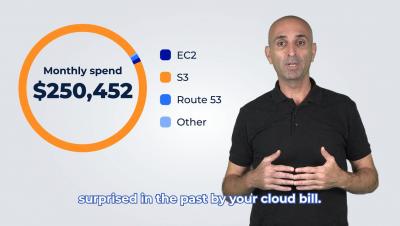
Should You Build Your Own Cloud Cost Optimization Tool? 3 Questions To Ask Yourself

This is a follow up to a blog series where we explore DIY cloud cost management, monitoring, and optimization tools. In the first, we investigated how Lyft, Netflix, Segment, Expedia, and Slack built theirs. Check it out here. “Build versus buy” is the eternal question for every engineering and DevOps team setting out to solve a technical problem. In the cloud cost monitoring and optimization world, both options can take on many forms.

Pandora FMS from Microsoft Azure

In this article we will focus on our on-premise platform, or cloud monitoring after having installed Pandora FMS console in Microsoft Azure. The installation will be made with an automated script that installs the Community version and with a second script, it allows to update Pandora FMS to its Enterprise edition (Corporative), leaving a 30-day test version (Trial).

Why choose Anodot for AWS cloud costs monitoring?

Anodot collects AWS real-time usage metrics and AWS CUR files to enable full visibility. Anodot automatically learns each service usage pattern, using patented anomaly detection technology and alert relevant teams to anomalous spikes or drops in real-time. Our patented anomaly detection technology learns the behavior and every service you use - EC2, S3, ELB and the rest, to automatically identify any deviation from the expected usage and cost pattens. Leave alert storms, false positives, and dashboards behind and leverage the power of proactive, autonomous monitoring.

Hybrid IT Environments - Another Twist in the Complex World of Modern Applications

Running your IT infrastructure from the cloud can be a smart choice for modern businesses. Cloud computing allows you to build a scalable, flexible architecture at an affordable price. But few businesses are 100% on the cloud. Businesses may have legacy systems or specific resources that work better on-premises, or they may have made a significant investment in on-premises hardware.

Hybrid IT Environments - Another Twist in the Complex World of Modern Applications

Running your IT infrastructure from the cloud can be a smart choice for modern businesses. Cloud computing allows you to build a scalable, flexible architecture at an affordable price. But few businesses are 100% on the cloud. Businesses may have legacy systems or specific resources that work better on-premises, or they may have made a significant investment in on-premises hardware.