Operations | Monitoring | ITSM | DevOps | Cloud

The latest News and Information on DevOps, CI/CD, Automation and related technologies.

How to Minimize Downtime During a Microsoft 365 Migration

Moving your organization's email, files, collaboration tools, and user accounts to Microsoft 365 is a major step toward a more flexible and secure workplace. Whether you're replacing an older email platform, merging companies, or reorganizing your IT environment, the migration process requires careful planning.

Introducing Spike's MCP

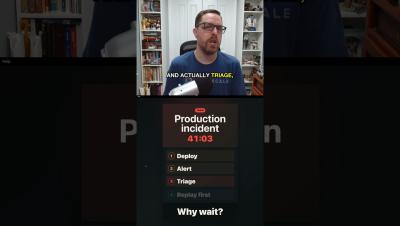
You probably spend most of your day next to an AI now. Code reviews, debugging, writing, it all happens in Claude Code, Cursor, or a chat window. But when an incident fires, you still have to leave. Open Spike, read the payload, copy the important bits over, explain the background, and only then start fixing. That gap is gone. Spike now has an MCP server. Your AI can fetch incident payloads, dig into root causes, acknowledge and resolve incidents, and set up on-call schedules and escalation policies.

How to plan a high-density colocation migration for enterprise workloads

What’s in this article? Modern enterprise workloads are demanding more from IT infrastructure than ever before. AI platforms, advanced analytics, virtualisation clusters and high-performance computing (HPC) environments all require significantly more compute power than traditional business applications. Many organisations are discovering that their existing on-premise facilities were never designed for these demands.

Custom deployment permissions for your environments (Beta)

You shouldn’t have to grant full repository admin rights just to let an engineer or release manager trigger a deployment. To solve the all-or-nothing access problem, Bitbucket Pipelines introduces custom deployment permissions (Beta). You can now gate specific environments to authorized users and groups, ensuring safer releases and easier compliance. Left: Add users and groups to gate deployments for this environment.

Software Release Management: A Practical Guide for Engineering Teams | Harness Blog

Software release management moves code through testing, approval, and into production with a clear rollback plan. 72% of organizations have hit a production incident from AI-generated code; developers now ship 63% faster (Harness, 2025). Effective release management needs defined stages, approval gates, automated testing, and the ability to roll back quickly. Feature flags, automated safety gates, and progressive delivery let teams ship faster and safer as AI raises code volume.

Shipped: Take your AI cost table straight into your own reports

A design partner told us the AI Explorer table needed a way to get data out so it could be saved and shared elsewhere. Now you export the whole view in one click, cost, tokens, cache, and model count all included. The values come through as clean numbers, not text you have to scrub. It’s the same pattern as Explorer, so there’s nothing new to learn.