Operations | Monitoring | ITSM | DevOps | Cloud

The latest News and Information on DevOps, CI/CD, Automation and related technologies.

SysAdmin's guide to migrating from CentOS

CentOS EOL - Are you affected? CentOS used to be community driven. Imagine an OS being tested by a global community of volunteers against a testing team in a company—that gave CentOS unmatched stability. An OS that came with Securuty-Enhanced Linux (SELinux) by default and also included 10-year support meant it was the favorite of both individual developers and enterprises as well (even Facebook, now known as Meta, used CentOS for its data centers).

Cortex Notifications: Stay up to date while staying in flow

Notifications are designed to be annoying. Think of your phone buzzing in a quiet room: it demands your attention, lighting up your screen and making noise so you look at it. A notification is supposed to pull you away from whatever you’re working on. They can be useful, but they can also be a nuisance.

Transforming DevOps with IaC and GitOps - John Dietz & Jared Edwards - Navigate Europe 23

Join John Dietz and Jared Edwards as they navigate the transformative journey from Infrastructure as Code (IaC) to GitOps, emphasizing the pivotal role of Kubernetes. This talk offers an in-depth look at combining IaC practices with GitOps advantages for robust and efficient DevOps operations. Don't miss this workshop on tool integration, workflow management, and a live demo illustrating GitOps in action.

Step-by-step Guide for Monitoring Redis Using Telegraf and MetricFire

Monitoring Redis instances is essential for maintaining performance, reliability, and security. It allows you to detect issues early, optimize resources, and provide a seamless experience for both developers and end-users. Monitoring your database allows you to track key performance metrics such as memory usage, CPU usage, and query response times. By analyzing these metrics, you can identify performance bottlenecks, optimize queries, and ensure that Redis is operating efficiently.

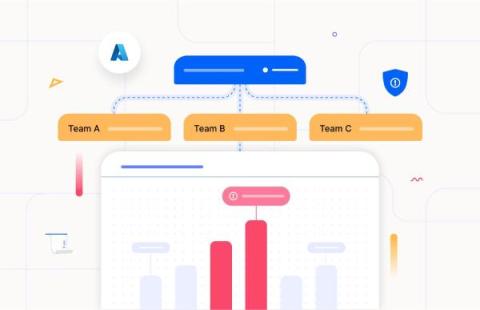
Simplifying Service Dependency With Squadcast's Service Graph

Microservices are fantastic for agility and innovation, but the trade-off is complex service management and ownership. With hundreds of interconnected services, troubleshooting and Incident Response can become a potential blocker. The traditional siloed approach to service ownership and the increasing deployment makes service management more complex.

"Our job is not to write code." | #GitKraken CTO Eric Amodio at #Dockercon

How should devs feel AI's rapid growth? What will happen to their jobs? 🤯 Well, GitKraken CTO Eric Amodio doesn't think developers should have an existential crisis. In a #Dockercon keynote with Justin Cormack, he explains that developers' jobs encompass way more than just writing code – it's about problem solving & critical thinking.

The Frugal Architect, Law I: Make Cost A Non-Functional Requirement

This is part one of seven in our Frugal Architect blog series. In case you weren’t as giddy as CloudZero was at re:Invent this year, we wanted to recount the seven laws outlined by Werner Vogels, Amazon’s CTO, which he’s bundled into a framework called “The Frugal Architect”. What is “The Frugal Architect”? A constitution of sorts for how engineers can build high-functioning, cost-efficient cloud software.

How Gremlin's dependency discovery feature works

Modern applications are rarely created entirely from scratch. Instead, they rely on a framework of pre-existing applications and services, each adding specific features and functionality. These dependencies empower teams to build and deploy applications more efficiently, but they bring their own set of challenges. Tracking, managing, and updating these dependencies is difficult, especially in large, complex applications where dependencies are likely managed by different teams.