The latest News and Information on DevOps, CI/CD, Automation and related technologies.
Engineering organizations that ship fast have Observability as part of their core DNA.
In 21st-century business, computing is what makes daily operations, competitive advantage, and strategic growth possible. The foundation that enables this is a hybrid cloud infrastructure that supports business requirements, delivers a suitable user experience, and stays on budget. Mastering the ABCs of infrastructure performance management (IPM) will put you on the road to long-term success.
In a recent meetup I hosted alongside Kunal Kushwaha, we discussed Cilium, an eBPF-powered open-source cloud-native networking solution that offers security, observability, scalability, and superior performance. Throughout this blog I will explore how the increased usage of Kubernetes has led to the need for advanced networking, security, and observability solutions. This will allow us to take a closer look at how Cilium can benefit Kubernetes users.
When you send an email or load a website, you probably never think about how the data gets from your computer to the server that needs to process it. But something does have to decide how the data will move across the vast expanse of the Internet – and, in particular, which of the virtually infinite number of potential routes your data will take as it moves from your device to a server and back again.
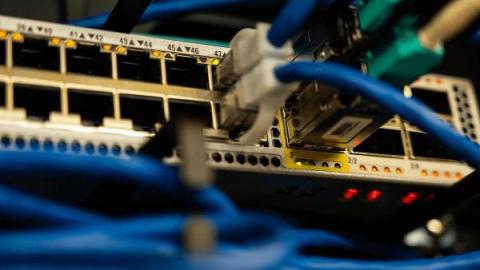
When you set up on-premise digital infrastructure, it is crucial to enable your devices to communicate with each other. The devices on your network should be able to send and receive data packets to handle requests and send responses back to callers. One of the components that allow data transmission to the proper destination is the network switch. The network switch plays an important role in distributing data packets to devices.
Networks today span the world and provide many connections between geographically disparate data centers, and public and private clouds. This creates a variety of network management problems. If your network is not working properly, it can be very difficult or even impossible to get the most productive or correct operation of your applications. A sophisticated network requires constant monitoring using the right tools and creating a network performance monitoring strategy.
Kubernetes is a popular open-source container orchestration platform. It is highly configurable and feature-rich, but it also requires a deep understanding of containerization. When you are running Kubernetes in production, you need to account for cluster monitoring and logging, governance, and security. In this article, you will learn about Kubernetes security, including pro tips to help you handle architecture concerns, dependencies, and container vulnerabilities.
Prometheus is a robust monitoring and alerting system widely used in cloud-native and Kubernetes environments. One of the critical features of Prometheus is its ability to create and trigger alerts based on metrics it collects from various sources. Additionally, you can analyze and filter the metrics to develop: In this article, we look at Prometheus alert rules in detail. We cover alert template fields, the proper syntax for writing a rule, and several Prometheus sample alert rules you can use as is. Additionally, we also cover some challenges and best practices in Prometheus alert rule management and response.