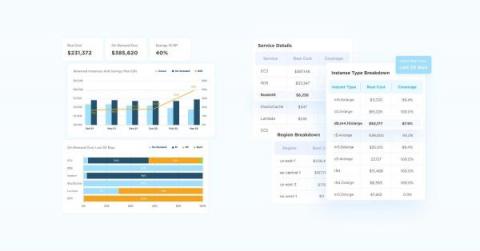
AWS, Azure & GCP: Using Their Latest Instances Effectively
Learn more and schedule a 1:1 demo at at https://www.densify.com/product/demo


The latest News and Information on DevOps, CI/CD, Automation and related technologies.
Learn more and schedule a 1:1 demo at at https://www.densify.com/product/demo
When it comes to learning from incidents, your tools should adapt to the way your organization works. Many of you conduct your retrospectives in rich-text document editing tools, like Google Docs. That’s why we’ve introduced the option to export your retrospectives to Google Docs. Retrospective export to Google Docs can be automated as part of your incident management process with a Runbook step.
While new cloud native architectures are incredibly feature-rich, they can come with a high barrier to entry. Many getting started tutorials are pages long and can take forever to complete. But these always start with the first step of performing an installation. In the spirit of making the installation of Speedscale as simple as possible, we have designed a new interactive installer as part of the speedctl command line interface.
WordPress is a popular platform for editing and publishing content for the web. This tutorial will walk you through how to build out a WordPress deployment using Kubernetes, ArgoCD, Crossplane, and Shipa. WordPress consists of two major components: the WordPress PHP server and a database to store user information, posts, and site data. We will define these two components and store them in a Git repository.
Oftentimes, people starting their journey in the field of software development don’t understand the importance of testing, including Golang app testing, until late in their careers. It’s essential to think about testing as an integral part of the software development lifecycle (SDLC) not only in theory but in practice, too. When building cutting-edge software, you need to make sure that the version being upgraded is error-free and that almost all of the failure cases have been considered.
When an incident happens, most organizations have a way of identifying all affected services. The trouble is, it’s often a human-centered process that depends on the knowledge of key individuals or manually updated documentation. There might be a version in your alerting tool, a version in your corporate Wiki, and a different version still in your team’s head.