Operations | Monitoring | ITSM | DevOps | Cloud

The latest News and Information on DevOps, CI/CD, Automation and related technologies.

Your Digital Enterprise; Performing at the Speed of DevOps

People working in digital enterprises will have no doubt noticed that customers have an insatiable appetite for new features and updates, with next to zero tolerance if digital services are performing poorly – or not at all. To thrive and survive in the digital era, it’s become an imperative for organizations to innovate at an unprecedented pace.
Work from home better with secure and reliable enterprise service

Today, we are facing an unprecedented situation. The COVID-19 pandemic is affecting everything we know -- our families, our businesses, our communities, and our way of life. In these tough times, many organizations have resorted to mandatory remote working for employees so they can still be productive and safe. Saas productivity tools like Zoom, Slack, G-Suite and Office 365 became seemingly mandatory in this new distributed workplace.

Migrating to Kubernetes

The reasons to move to Kubernetes are many and compelling. This post doesn’t make the case that you should migrate, but assumes you have already decided that you want to. When you’re clear on what you want to do and why you want to do it, the questions of “When?” and “How?” become your focus. What follows centers on the question of how to approach making Kubernetes the platform on which your workloads thrive.

Episode 9: Running ASP.NET Core Applications Using Systemd and Ansible

A web application isn't much use if it isn't running. We hand in our neckbeard cards and copy+paste our way out of the problem. Last episode, we configured NGINX to act as a reverse proxy for our Asp.Net Core application. We tested our setup by manually running the .Net Core app from an SSH session. Today we'll fix that stop-gap step by running our application as a service with systemd. We'll add the new service by running a few tasks in Ansible.

Parallel Maven Deployment with Jenkins and Artifactory

There are many reasons why you may want to use Artifactory as your Maven repository. For example, it allows tagging Maven artifacts with custom properties, so that they can later be found based on specific criteria. It stores build metadata about your artifacts, and allows controlling the repositories used by the Maven build, without modifying the pom file. In this post, I’d like to focus on one specific advantage, Maven deployments in Jenkins.

Why Cloud Cost Optimization is Ready to Shift Left (Just like Security Did)

Today, you probably wouldn’t blink at the idea of involving security in your development process. In fact, “shifting security left” has become so commonplace in the security industry, that there are conferences and job titles dedicated to SecOps (or DevSecOps or SecDevOps *eye roll emoji*). Yet, it wasn’t that long ago that the massive transition to this mindset took place.

Introduction to Pipelines on JFrog Platform

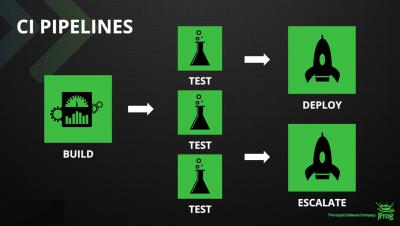
Learn how to optimize your complete end-to-end development and delivery process by using JFrog Pipelines. In this webinar we share a real-life demo of an application lifecycle from Dev to Production. Join us to learn how JFrog Pipelines helps you easily create smart, event-driven workflows across your tools and teams to help you improve the quality and velocity of your releases, and scale your CI/CD adoption across the organization.