Operations | Monitoring | ITSM | DevOps | Cloud

It takes a hacker 48 hours to exploit a vulnerability. Why does it take 43 days to patch it?

It is not always possible to patch vulnerabilities as quickly as hackers exploit them, but recent figures show just how much this gap has widened. FortiGuard Labs estimates that the time between the disclosure of a critical vulnerability and its active exploitation has dropped sharply to between 24 and 48 hours. By contrast, Verizon’s 2026 Data Breach Investigations Report shows that organizations take a median of 43 days to complete vulnerability remediation.


HITL for autonomous agents: Where does the human go?

Human approval is easy when you are sitting in front of the agent. For an agent running by itself in a cluster, almost none of that holds. You’re in a meeting and your agent is running in a cluster. It has a service account, it has been asked to keep a service healthy, and it has just worked out that the right fix is to roll back a database migration. Nobody is watching it. That was rather the point of deploying it. You want to get notified to approve such an important action.

How Federal IT Teams Prepare for FIPS 140-2 Historical Status Before It Delays Authorization

September 22, 2026 is not an operating system shutdown date. It is a cryptographic compliance transition that changes what federal organizations can use for new systems and what they must defend in existing ones.

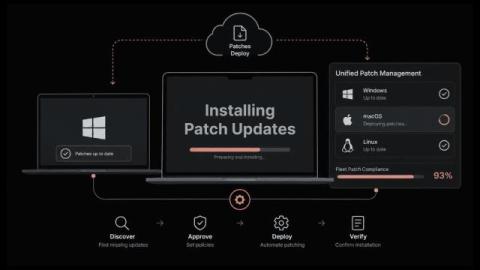
macOS Patch Management for Mixed Windows and Mac Fleets

How many Macs in your environment are running an OS build that your patch compliance report has never counted? In most mixed Windows and Mac deployments, the Windows side is managed by policy and the Mac side is managed by hope. Designers, executives, and engineering leads install updates when a notification interrupts them, and otherwise dismiss the prompt for months.

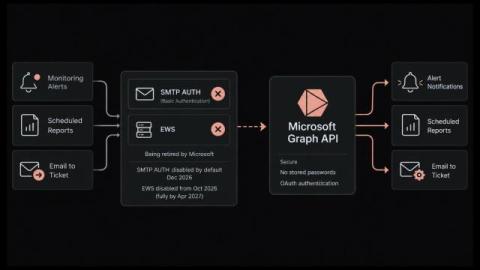
Moving Alert and Email-to-Ticket Mail off SMTP AUTH to Microsoft Graph API

Every monitoring alert, scheduled report, and email to ticket conversion in your stack depends on a mailbox. Most monitoring and helpdesk management tools still reach that mailbox the old way. They log in with a username and password over SMTP or EWS. Exchange Online is closing both doors on a published schedule. The tools that fail will fail silently. In this blog, you will: By the end, you can run the change on a weekday afternoon and know nothing went quiet.

6 Best Pull Request Review Tools for Enterprise Teams in 2026

Finding the right pull request review tool can mean the difference between a team that ships confidently and one that drowns in open PRs. When review workflows are scattered across tabs, comment threads, and standalone dashboards, code quality and velocity both take a hit. GitKraken gives you a unified code review experience that connects your IDE, desktop client, and browser so reviews happen where you already work.

JFrog Artifactory Supports LuaRocks Hosting for NGINX, OpenResty and Kong

If your NGINX/OpenResty servers or Kong gateways pull Lua modules straight from public luarocks.org, one upstream outage can stall every build and deploy that depends on a “rock”. With LuaRocks support in JFrog Artifactory, you host and proxy those modules from a private LuaRocks registry you control, using the native experience you expect, not a bolted-on workaround.

Automate Incident Management with PagerDuty Slack

Most organizations managing major incidents realized that every moment matters. Context-switching between different tools – with multiple web and chat surfaces having to be open to collect information causes friction. The cost of context-switching during an outage is even more painful. These are the problems that PagerDuty’s Slack Transformation just closed.

September 2026 at Bindplane: Bindplane Agent and a new Overview page

Also this month, a new BDOT 1.107.0 release, and you can start a configuration from a Full-Pipeline Blueprint. Here’s what happened in the last month. Prefer to watch? The September Community Call is streamed live on YouTube. Watch " YouTube" on YouTube Watch.

Organizing Devices for More Efficient Classrooms

Modern classrooms rely on digital tools for daily lessons. Teachers handle dozens of screens every morning. Managing these tools takes clear planning and solid structure. Cluttered spaces create unnecessary stress for students and staff. Stacking laptops on open tables leads to tangled cords and damaged screens. A clear storage plan keeps the room safe and ready for learning.