
Operations | Monitoring | ITSM | DevOps | Cloud

Cron Job Monitoring: Catch Silent Failures

Cron job monitoring is the part of observability most teams skip until a backup turns out to have stopped running three weeks ago. A web server that falls over generates errors, trips a threshold and pages someone inside a minute. A nightly job that quietly stops running generates nothing at all. There is no error rate to alert on, no latency spike, no failed health check. There is only an absence, and absence is invisible to almost every monitoring setup by default.

24/7 On-Call Coverage With a Small Team

Running 24/7 on-call coverage with a small team is first of all an arithmetic problem, and most teams avoid doing the arithmetic because the answer is uncomfortable. There are 168 hours in a week. Your engineers work roughly 40 of them. Somebody has to be reachable for the other 128, and if you have four engineers, that somebody is each of them, one week in four, thirteen weeks a year.

How to operate shared platforms safely at agent scale

A platform engineering team can design robust Golden Paths for agent use yet still be unprepared for what happens after adoption. An agent may authenticate properly, call the correct tools, adhere to approval gates, and complete tasks without incident, but new operational risks arise once multiple teams begin running agents continuously and in parallel. We’ve encountered these risks firsthand at Datadog.

Monitor TAS and gang scheduling for AI training in Kubernetes

Distributed AI training workloads impose complex scheduling requirements that Kubernetes’s built-in scheduler can’t meet. Kubernetes schedules pods individually and independently, but distributed training introduces two requirements that break this model: Pods must land on hardware with the right inter-GPU bandwidth, and all pods must be scheduled simultaneously. If either requirement goes unmet, training stalls or runs far below the hardware’s potential.

Manage Cursor costs with Datadog Cloud Cost Management

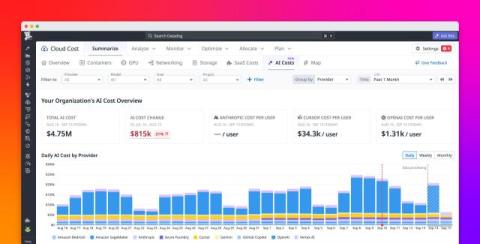
AI coding tools such as Cursor are becoming a significant source of engineering spend. But Cursor costs can be difficult for FinOps teams to manage. Cursor’s usage data alone doesn’t tell you how costs break down across users and models, and fixed-threshold alerts may not catch an unusual cost spike if spend remains below the threshold. Datadog Cloud Cost Management (CCM) brings Cursor costs into the same place where you monitor cloud, SaaS, and other AI spend.

Best DNS Monitoring Tools in 2026 [24 Analyzed]

The best DNS monitoring tools are Hyperping for fast DNS checks with on-call and a status page, Oh Dear for authoritative nameserver comparison and change history, Site24x7 for DNSSEC and global locations inside a suite, UptimeRobot for inexpensive DNS checks next to HTTP, and DNS Spy for dedicated DNS security and WHOIS. I analyzed 24 current products and shortlisted five. Every tool below can query DNS on a schedule and alert when the answer is missing or wrong.

Service Desk vs. Help Desk: What's the Difference (and Where Does ITSM Fit In)?

A help desk is the front-line function that receives user issues and requests, records them, provides basic troubleshooting, and routes unresolved work to the appropriate specialist. Its goal is to restore user productivity quickly. Typical help desk activities include: The work is usually tactical and reactive. A user cannot connect, open an application, or complete a task, so the help desk responds.

Bindplane Agent Is Here: Build, Edit, and Understand Pipelines in Plain Language

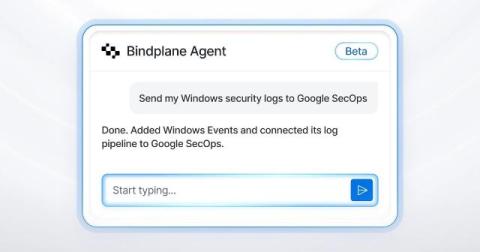
Pipeline Intelligence already recommends processors, reads live telemetry, detects log types, and generates processor bundles from natural language. But most of it lives inside a single processor node. You still have to know which one to open and what to ask for. This changes today. Bindplane Agent is your AI assistant inside Bindplane, ready to act on what you describe in plain language.