Operations | Monitoring | ITSM | DevOps | Cloud

Survey: How Much Do Data Center Managers Trust Their Data? And Where Can They Improve?

Data center decisions are only as reliable as the information behind them. An asset inventory can accurately describe the equipment it records while still omitting assets that have not been documented. Power readings can be current for monitored equipment while other gaps go unnoticed. And when infrastructure data is spread across disconnected systems, getting a complete picture becomes harder.

Monitoring WooCommerce Background Jobs with AppSignal

WooCommerce relies on a lot of work happening in the background. Some of that is handled by WordPress cron, while other tasks are queued through Action Scheduler. This can include things like sending scheduled emails, processing subscription renewals, delivering webhooks, running scheduled WooCommerce actions, and other maintenance tasks that do not happen during a normal page request. The problem is that when one of these background jobs stops running, it is not always obvious straight away.

What's new with Grafana variables: less clutter, easier reuse across dashboards, and more

Template variables are one of the most used features in Grafana, providing users with a dropdown to turn one dashboard into hundreds: pick a different cluster, region, or service, and every panel updates. For most of Grafana's history, variables had a single home at the top of the dashboard. Each dashboard had one flat list of variables, and that list was shared by every panel on it. But as dashboards grew in size and number, those controls became harder to organize and maintain.

We Rebuilt Harness for Agents: Introducing a New Platform Experience

Hundreds of millions of deployments taught us what delivery takes. The new platform experience applies it to a world where agents do the work. A year ago, the question was whether agents could write code. That question is settled. The new question is whether they can ship it. Building an agent is easy. Running one inside a real delivery process is not. Real work runs through pipelines, approvals, data, and quality gates. Delivery has always been designed around the people doing the work.

What's New in AlertOps: The Experience Update

The AlertOps Experience Update is rolling out to every AlertOps customer. It reorganizes the web app around the way an incident runs, starting with a left-side menu that keeps every part of AlertOps one click from any screen. This post walks through what you will see when you log in, where everything lives now, and a few things worth trying first. Your data, schedules, escalation policies and integrations carry over exactly as they are, so there is nothing to migrate or reconfigure.

What are Civo's 40 UK edge data centres?

When people hear that Civo is building a gigawatt of AI capacity in the UK, they usually picture one thing. A vast campus in a field somewhere. Hundreds of thousands of GPUs under one roof. The kind of site that gets announced with a ministerial visit and a five-year timeline. We are doing the opposite. We are building 40 data centres, spread across the country, each one close to the people and organizations that will use it. On 22 September we unveiled the first one, in Hertfordshire.

Active Directory Asset Management: How to Connect InvGate Asset Management With Active Directory And Entra ID

Active directory Asset Management means connecting your Active Directory to your IT Asset Management (ITAM) tool so the people and computers registered in the directory feed the asset inventory. IT teams look for it when they want asset owners to come straight from the directory, technicians to sign in with their corporate account, and every computer in the domain to show up in the inventory.

Automatic Release Readiness Scorecards

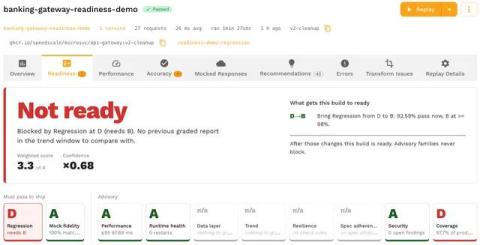
Speedscale’s automatic release readiness scorecard grades a completed replay against the release rules in its test configuration. It returns a Ready or Not ready verdict, letter grades for ten metric families, a weighted score and a confidence factor. This feature provides a concrete and automatic baseline for whether new releases are ready for production. The underlying test runs recorded traffic against a build, with dependencies mocked from the recording.

How to Use Automatic Release Readiness Scorecards

This guide uses Speedscale’s readiness scorecard to compare three builds of a Spring Cloud Gateway service on Kubernetes. It covers a regression that still meets the test’s pass-rate goal, a GET-only retry evaluated under injected dependency failures, and a CI check that requires a Ready verdict. The example uses api-gateway from the banking demo’s readiness-demo branch. The three image tags identify distinct builds.

Accelerate troubleshooting with Monitor AI Insight

Monitoring used to mean checking that your dashboards looked fine and starting to troubleshoot when something broke. That approach is outdated. Today, the health of your applications directly affects your business. A slow checkout page, a lagging database, or an unresponsive server costs you customers, revenue, and trust. A problem that once took hours to identify and fix is no longer acceptable. This is where AIOps comes in.