
Operations | Monitoring | ITSM | DevOps | Cloud

The latest News and Information on Log Management, Log Analytics and related technologies.

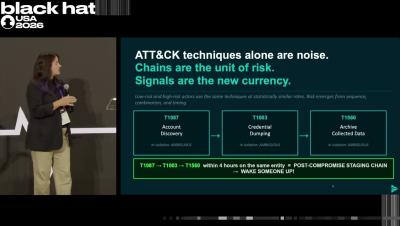
Introducing APEX: Adversarial Pattern Extraction and Correlation

In this Black Hat talk, Nicole Beckwith introduces APEX (Adversarial Pattern Extraction and Correlation), a detection framework—not a Cribl product—that clusters TTP-based signals around entities to support behavioral detection. It is intended for security practitioners, SOC and detection teams, and threat hunters who want to learn how to use raw telemetry or OCSF data, TTP chaining, time windows, criticality, and cross-correlation to detect behavior beyond static indicators and rule-count coverage.
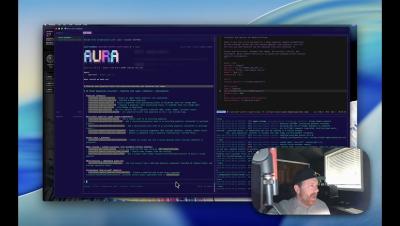
AI SRE Agent ChatOps: How AURA Runs in a Slack Incident Channel

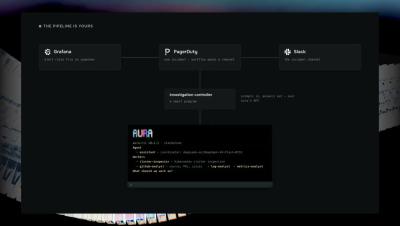
AURA runs as a standalone service and knows nothing about Slack. A separate bridge streams events off its API, which is what makes the chat tool swappable. This is the implementation behind the automated PagerDuty investigation demo. Jeff Vogt walks the whole path an incident takes: a Grafana alert fires PagerDuty, PagerDuty opens a Slack channel and sends a webhook, and a service called AURA Bridge picks it up and calls AURA's API with an investigation prompt.

AI SRE Agent Approval Workflow: Identity Forwarding to MCP Servers

Two engineers can hold the same approve button and still not be allowed to make the same change. The key riding with the approval settles it. AURA's human in the loop config gates the create_pipeline tool on the Mezmo MCP server and sends each request to a webhook for review. A mock UI stands in for the approval system here, and Mike walks through the payload schema so you can point it at your own.

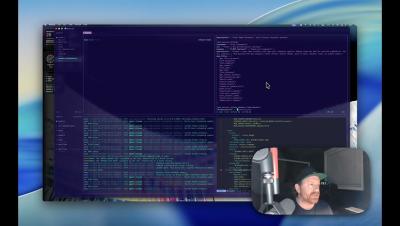
AI SRE Agent MCP Authentication by Header: Keep Keys Out of the Config

Nobody wants an API key sitting in an agent's config file on a shared server. Mike shows how AURA takes the credential off the request instead. AURA can hold your keys in its config file, but it does not have to. Mike Shearer, one of AURA's creators, walks through the alternative: AURA reads named headers off the incoming request and forwards them to the MCP servers it calls, so the credential never has to sit on disk.

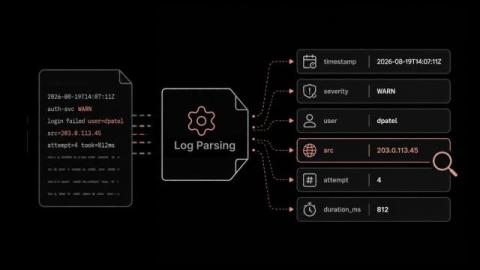
Log Parsing: How Raw Logs Become Searchable Fields

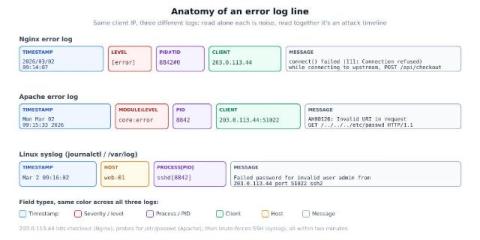
A log file full of raw text is close to useless when an incident is running. You can grep it. What you cannot do is ask how many failed logins came from one address in the last ten minutes. That is usually the question in front of you. Log parsing closes that gap, and a log parser is the software that does the work. In this blog, you will see: Log parsing is the process of reading a raw log line and extracting its values into named, structured fields.

Mobot levels up: Build incident response playbooks with natural language

We’ve recently shown how Mobot, Sumo Logic’s AI assistant, has evolved from a search assistant into a true thinking partner, introducing natural language to log analysis and monitors. Today, we’re bringing that same conversational reasoning to one of the most powerful parts of the platform: playbooks in Automation Service. Historically, playbook authoring has been a highly manual process that required deep organizational and Sumo Logic platform knowledge.

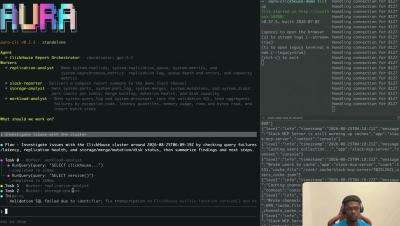
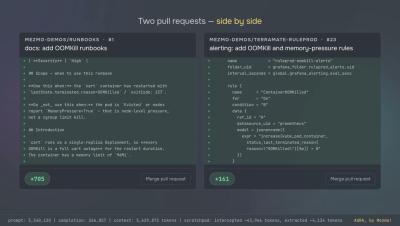
AI SRE Agent Audits Runbook Coverage and Opens the PRs: AURA

3 a.m., the pager fires, and the runbook describes a service that shipped three versions ago. Ask the agent what the cluster actually has instead. Runbooks go stale because clusters change faster than documentation does. Every deploy, every new service, every renamed alert widens the gap between what is running and what is written down.