Operations | Monitoring | ITSM | DevOps | Cloud

The latest News and Information on Monitoring for Websites, Applications, APIs, Infrastructure, and other technologies.

Monitor your .NET MAUI apps with Datadog RUM

As.NET Multi-platform App UI (MAUI) becomes the default cross-platform UI framework in the Microsoft ecosystem, many teams are standardizing on it to build mobile applications for iOS and Android. However, observability has not kept pace with the shift in adoption. Developers often rely on unsupported community bindings or maintain their own wrappers around native iOS and Android SDKs, which introduces instability and ongoing maintenance.

Best IT Help Desk Software in 2026: 10 Tools Compared

How do you pick the right IT help desk software when every vendor calls itself the best? It comes down to three things. Your team size, your deployment rules, and whether you need full ITSM or plain ticketing. A five-person startup can run support from a shared inbox. A 200-person IT team cannot. Add asset tracking, SLAs, and change control, and that inbox falls apart. The right IT support software routes tickets on its own, links every request to the asset behind it, and shows you where time goes.

Multi-Agent Collaboration on a Shared Canvas

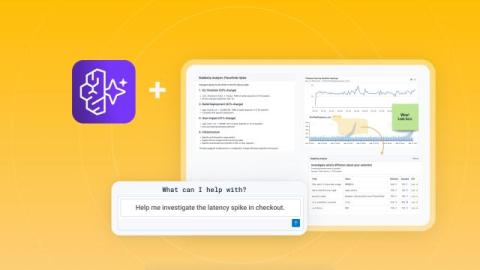
This post was co-written with Staff Software Engineer Martin Holman. Honeycomb Canvas is a collaborative investigation environment. When something goes wrong in production, multiple engineers might join the same Canvas to debug it together. Each person has their own AI agent, so they can pursue their own conversation thread and line of inquiry. This creates an opportunity for coordination.

The future of governing AI agents

How to build governance into autonomous security agents from the architecture up The industry has moved fast on capabilities. Agents now triage alerts, investigate endpoints, create detection rules, and enrich indicators, and they are even capable of performing most actions we as security operators can perform. The architecture patterns are maturing, as are the models, but governance is not keeping pace.

Two Days Away From the Keyboard: Our Team Event Recap

Once a year, the Icinga team goes for a team event somewhere about an hour or two away from the office. This year’s edition landed us at the Adventure Campus in Treuchtlichen, right in the middle of this year’s first heatwave. The heat was unbearable. At one point we gave up on the room we had been using and moved everyone down into a basement meeting room instead. It was quite a bit more retro in style, with an overhead projector, that we had a lot of fun with.

AI-powered monitoring with Site24x7's Zia

In this video, you'll learn how to integrate Large Language Models (LLMs) with Site24x7 using Bring Your Own Key (BYOK), Zoho Key Services (ZKS), and Microsoft Azure OpenAI. Discover how Zia helps you analyze outages, understand performance issues, identify root causes, and get monitoring insights using simple natural-language queries. What you'll learn.

How to Hold Your ISP Accountable: Network Monitoring for Schools & Multi-Site Public Institutions

The Internet at one of your school sites slows to a crawl. Teachers can't load their lesson plans. A video call for a virtual class freezes. Your IT team calls the ISP. The ISP runs its own checks and tells you everything looks fine on their end. Sound familiar? This is the core problem every school board and public institution runs into eventually. Your ISP has full visibility into their own network. You don't.

The invisible visitor: Why the internet is no longer just for humans

"Every website was once designed for people. That assumption is beginning to change." For nearly three decades, the internet has worked in a predictable way. Whenever we wanted to know something, we searched for it, clicked through a few websites, compared information, and made a decision. Whether it was buying a new phone, planning a vacation, or researching software for work, businesses knew exactly how people behaved online.

Deterministic vs Probabilistic AI Engineering Explained

Deterministic processes carry one guarantee: the same input will produce the same output. That guarantee built the entire observability stack. AI broke that contract by reasoning in terms of probability. The same input can now produce different outputs, whether from AI-generated code that carries assumptions invisible in staging, or from distributed systems where timing creates failures that no pre-captured telemetry can anticipate.