The latest News and Information on Monitoring for Websites, Applications, APIs, Infrastructure, and other technologies.
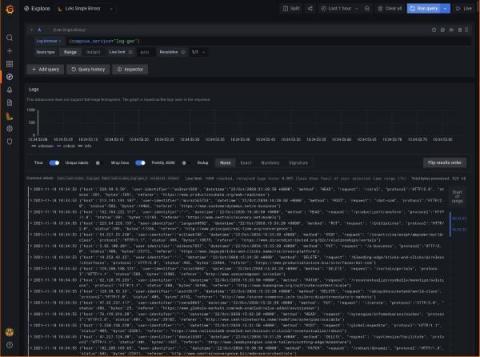
With the recent release of Loki 2.4 and Grafana Enterprise Logs 1.2, we’re excited to introduce a new deployment architecture. Previously, if you wanted to scale a Loki installation, your options were: 1) run multiple instances of a single binary (not recommended!), or 2) run Loki as microservices. The first option was easy, but it led to brittle environments where a heavy query load could take down data ingestion and problems were often difficult to debug.
AIOps is an approach to managing the exponential growth of IT operations and the complexity of new technology through the application of artificial intelligence (AI). IT infrastructure increasingly relies on complicated deployments, multi-cloud architectures, and huge amounts of data. Traditionally, the tech industry responds to complexity by applying extra brainpower to the problem, bringing in more engineers, developers, and management.
Istio has quickly become a cornerstone of most Kubernetes clusters. As your container orchestration platform scales, Istio embeds functionality into the fabric of your cluster that makes monitoring, observability, and flexibility much more straightforward. However, it leaves us with our next question – how do we monitor Istio? This Istio log analysis guide will help you get to the bottom of what your Istio platform is doing.
Logz.io customers, here’s some big product news that we think you’ll be excited to hear. Scheduled Alerts, an altogether new manner of alerting, is coming your way. That’s right, get ready to utilize a whole new world of alerts that weren’t previously available in the Logz.io platform.
There’s something common between AVD and eG Enterprise. Can you take a wild guess? Listening on open TCP ports is an extremely bad practice for cloud architectures, as it exposes products and services to accepting incoming messages from malicious parties. This is something eG Innovations avoids in our own products (see details). This is also a best practice adopted by Microsoft for Azure Virtual Desktops (AVD).