Operations | Monitoring | ITSM | DevOps | Cloud

The latest News and Information on Monitoring for Websites, Applications, APIs, Infrastructure, and other technologies.

Power BI vs. SquaredUp: Which is right for IT teams?

At first glance, Power BI and SquaredUp both look like dashboarding tools. In practice, they solve different problems. SquaredUp serves engineering teams and IT teams, including SREs, DevOps engineers, engineering managers, and technology leaders. It connects to monitoring, cloud, DevOps, and ITSM platforms. This gives teams a real-time insights into service health, performance, and key metrics in one place. Power BI is Microsoft's business intelligence platform, designed for analysts and business teams.

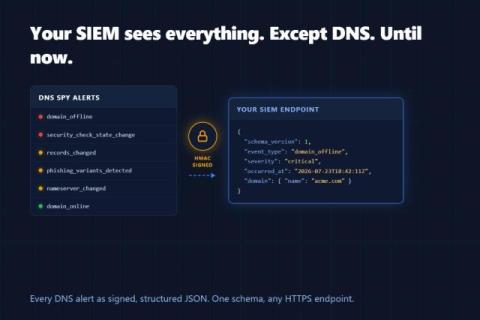
Send DNS Spy Alerts to Your SIEM: Introducing Webhook Alerts

Enterprise teams can now add a Webhook alert channel that POSTs every DNS Spy alert — DNS record changes, domain outages, security check failures, WHOIS updates, phishing look-alike detections — to any HTTPS endpoint as structured JSON. Requests are optionally HMAC-signed, every delivery is logged and retried, and a Send Test button verifies your integration end to end.

From 57 bugs to 1, thanks to Seer

I was at the dentist the other day, getting ready for my appointment. The waiting room was pompously decorated. Each chair seemed to be from a different, expensive Danish designer. As I realize I’m about to get charged through the nose, I get a notification from my beloved Mail app. ** ding ** Screenshot of GitHub email notification It’s a new Pull Request on GitHub. This one is different though. I have no idea where it came from!

Why Predictability Is the Most Valuable Upgrade Feature

When organizations evaluate a software upgrade, the conversation often begins with features, functionality, and innovation. Those considerations are important, but they are rarely the primary concern for the teams responsible for executing the upgrade. Operations leaders are typically focused on a more practical question: can the upgrade be completed successfully, within the planned maintenance window, with clear support paths, and without creating unnecessary disruption for the business?

What's New in InfluxDB 3: 5 New Processing Engine Plugins

Summary The five most recent plugins from the InfluxDB team are live: Sagemaker, value counter, Chronos forecasting, simple data replicator, and a stock portfolio tracker. Table of Contents The InfluxDB team has released five new Processing Engine plugins. They range from making it easy to call a hosted ML model to pulling in stock market data in real-time. Every one of them can be activated with a few terminal commands.

Introducing Obkio's Network Quality Widget: See Network Health at a Glance

We've been making a series of improvements across Obkio’s Network Monitoring and Observability application, and a lot of that work has been focused on one goal: simplifying not just how we show network performance data, but how easy it is to actually interpret and understand that data. Not everyone monitoring a network has the time, or the networking background, to dig through graphs line by line to figure out what's going on.

Why One Process Can Slow an Entire VDI Environment

When users report slow virtual desktops, the first instinct is often to check CPU or memory utilization. But what happens when those metrics look perfectly healthy, yet users across the environment are still complaining about slow application launches, lagging desktops and poor performance? In many cases, the bottleneck lies elsewhere. Storage is often overlooked during initial investigations, but in VDI environments it can have a disproportionate impact on the user experience.

Elastic's new metrics capabilities will dramatically improve uptime for public sector IT

The new columnar metrics engine in Elastic Observability enables public sector IT teams to combine logging, metrics, and traces in one platform. As a result, SREs can improve uptime while protecting taxpayer dollars in the process. Public sector site reliability engineers (SREs) operate under a distinct set of pressures, whether that’s supporting a federal agency, a health department, a public university, or a transit authority.