Operations | Monitoring | ITSM | DevOps | Cloud

What's New in AlertOps: The Experience Update

The AlertOps Experience Update is rolling out to every AlertOps customer. It reorganizes the web app around the way an incident runs, starting with a left-side menu that keeps every part of AlertOps one click from any screen. This post walks through what you will see when you log in, where everything lives now, and a few things worth trying first. Your data, schedules, escalation policies and integrations carry over exactly as they are, so there is nothing to migrate or reconfigure.

What are Civo's 40 UK edge data centres?

When people hear that Civo is building a gigawatt of AI capacity in the UK, they usually picture one thing. A vast campus in a field somewhere. Hundreds of thousands of GPUs under one roof. The kind of site that gets announced with a ministerial visit and a five-year timeline. We are doing the opposite. We are building 40 data centres, spread across the country, each one close to the people and organizations that will use it. On 22 September we unveiled the first one, in Hertfordshire.

Active Directory Asset Management: How to Connect InvGate Asset Management With Active Directory And Entra ID

Active directory Asset Management means connecting your Active Directory to your IT Asset Management (ITAM) tool so the people and computers registered in the directory feed the asset inventory. IT teams look for it when they want asset owners to come straight from the directory, technicians to sign in with their corporate account, and every computer in the domain to show up in the inventory.

The Truth About End-to-End Testing Explained #softwaretesting #endtoendtesting #devops #qualitytest

End-to-end (E2E) testing brings your entire system together in a staging or UAT environment to test real user paths and ensure core functions work as expected. However, because E2E tests are non-comprehensive and miss edge cases, they must be combined with other testing methodologies. Learn more: speedscale.com.

Automatic Release Readiness Scorecards

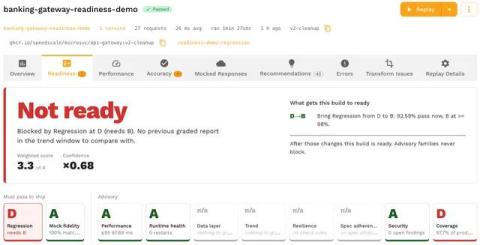
Speedscale’s automatic release readiness scorecard grades a completed replay against the release rules in its test configuration. It returns a Ready or Not ready verdict, letter grades for ten metric families, a weighted score and a confidence factor. This feature provides a concrete and automatic baseline for whether new releases are ready for production. The underlying test runs recorded traffic against a build, with dependencies mocked from the recording.

How to Use Automatic Release Readiness Scorecards

This guide uses Speedscale’s readiness scorecard to compare three builds of a Spring Cloud Gateway service on Kubernetes. It covers a regression that still meets the test’s pass-rate goal, a GET-only retry evaluated under injected dependency failures, and a CI check that requires a Ready verdict. The example uses api-gateway from the banking demo’s readiness-demo branch. The three image tags identify distinct builds.

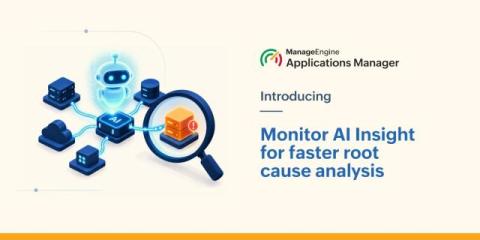
Accelerate troubleshooting with Monitor AI Insight

Monitoring used to mean checking that your dashboards looked fine and starting to troubleshoot when something broke. That approach is outdated. Today, the health of your applications directly affects your business. A slow checkout page, a lagging database, or an unresponsive server costs you customers, revenue, and trust. A problem that once took hours to identify and fix is no longer acceptable. This is where AIOps comes in.

Google's Stock Drop Reveals What AI Is Missing

Google just reported $51.4 billion in quarterly capital spending. Anthropic has filed for an IPO. And GitHub's AI coding explosion is raising serious questions about software security. Is the AI boom creating real business value, or are we heading toward an AI bubble correction? In this episode of ShipTalk, Adam Arellano and Martin Reynolds are joined by cybersecurity expert Jake Bernardes, CSO at Gambit, to break down three major developments reshaping artificial intelligence, software development, and cybersecurity.

Q3 FY27 Product Update: Harness Pipeline

Discover the latest features, enhancements, and updates in the Q3 FY27 product update for Harness Pipeline Q3 FY27 gives you more control over how pipelines run, with project-level concurrency partitions, pipeline identities, and a customizable run form. Policy as Code also expands: you can run policy sets on your own infrastructure and preview a change with Blast Radius Analysis before you save it.