Operations | Monitoring | ITSM | DevOps | Cloud

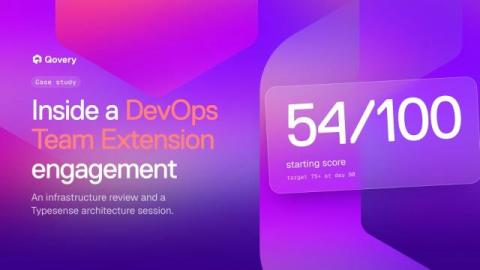
Inside a DevOps Team Extension engagement: an infrastructure review and a Typesense architecture session

How Qovery assessed a growing B2B SaaS company's infrastructure across about 150 controls, what the review with their team changed, and why a Typesense high-availability project turned into a sharding plan. Romaric founded Qovery to make Kubernetes accessible to every engineering team. He writes about platform strategy, developer experience, and the future of cloud infrastructure.
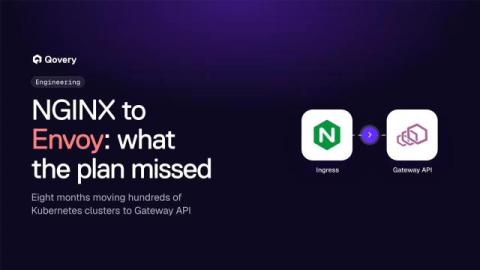
Replacing NGINX with Envoy Gateway on Hundreds of Clusters: What the Plan Missed

In February we planned to move every Qovery-managed cluster from ingress-nginx to Envoy Gateway by the end of March. It took until October. Here is the rollout model, every class of problem we hit, and what I would do differently. Benjamin is a staff engineer at Qovery focused on infrastructure automation, Kubernetes internals, and building the deployment engine that powers thousands of clusters.

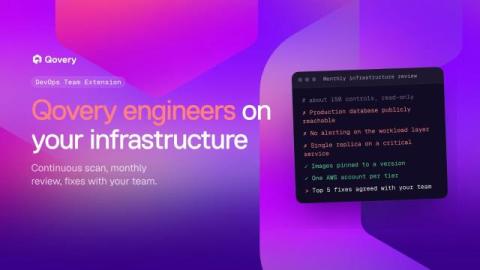
DevOps Team Extension: Qovery engineers watching your infrastructure every month

DevOps Team Extension gives growing engineering teams a named Qovery engineer, a continuous infrastructure scan, and a monthly remediation plan, so they can scale reliability, security and compliance without hiring a DevOps team first. Romaric founded Qovery to make Kubernetes accessible to every engineering team. He writes about platform strategy, developer experience, and the future of cloud infrastructure.
The Citrix Security Crisis Exposed a Bigger Problem

Citrix was facing a major security crisis before its official warning even went out. Companies were already pulling critical network devices offline as attackers exploited serious vulnerabilities in Citrix NetScaler ADC and Gateway systems. In this ShipTalk clip, Adam, Martin, and Starr break down the Citrix zero-day vulnerabilities, the race to respond, and the impossible decision facing security teams: keep potentially compromised infrastructure running or rush to deploy a patch.

SecureBridge 12.1, EntityDAC 4.1, and dbExpress drivers: Support for RAD Studio 13 Florence Release 2, SQL Server 2025, and MySQL 9.7

New versions of SecureBridge, EntityDAC, and dbExpress drivers are out. All three now work with RAD Studio 13 Florence Release 2 and offer improved support for the Arm64EC target platform. Devart dbExpress drivers also add support for Microsoft SQL Server 2025 and MySQL 9.7, while SecureBridge gains SFTP upload resume, multipart/form-data support, and a new SSL/TLS demo.

Elastic Introduces Elastic nightshift AI SRE to Investigate with the Full Context Others Can't Afford to Keep

The AI SRE uses complete context from across the entire stack to continuously detect issues and learn from every incident, delivering evidence-backed answers engineers can trust.

How to Integrate NinjaOne with a SIEM

In this episode of NinjaOne01, Jeff Hunter, Field CTO at NinjaOne, walks through NinjaOne’s new SIEM Exporter App. The app is a dedicated place to set up and monitor the webhooks that send NinjaOne activity data to your third-party SIEM (Security Information & Event Management) system. Note: this is an early access feature, so contact your account manager to have it enabled for your account. What this video covers.

Why AI SRE Agents Need More Than Observability Data with Groundcover | Civo Navigate London

Your AI agent can read every log, metric and trace in seconds. It still can't tell you why things broke. At Civo Navigate London, James Herbert of groundcover explains why AI SRE agents need that context to travel the whole development lifecycle. He shows how agents embedded in the tools where software is built and run can move from isolated tasks to investigating and acting with the full picture.

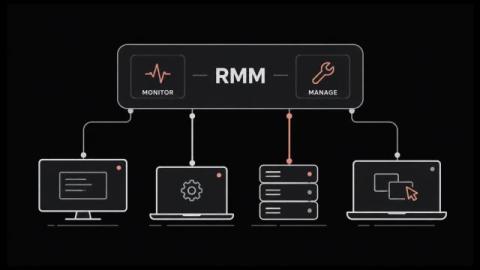
What Is RMM (Remote Monitoring and Management)?

RMM lets one small team look after thousands of machines nobody will ever physically touch. It grew up inside managed service providers. The whole category runs on agent-based monitoring, which means a small program sits on every endpoint and phones home on a schedule. That agent is also why attackers have taken such an interest lately. In this blog, you'll see: By the end you'll know what the category covers and where it stops. RMM stands for remote monitoring and management.

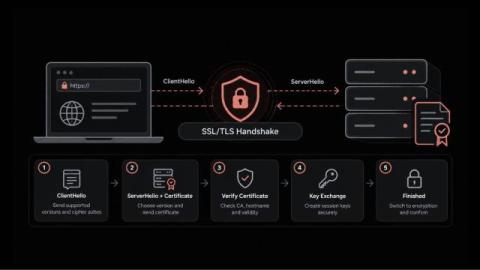
SSL Handshake Guide Covering Each Step and the Fixes That Prevent Outages

Why would a website that passes every uptime check still show customers a security warning? In most cases, the server is running and the network is healthy. The failure happens earlier, during the brief exchange in which the browser and the server agree on how to communicate securely. That moment is the SSL handshake. If it goes wrong, users get an error page while your dashboards stay green. Maybe a certificate expired; maybe a routine change left both sides on different protocol versions.