The latest News and Information on Continuous Integration and Development, and related technologies.
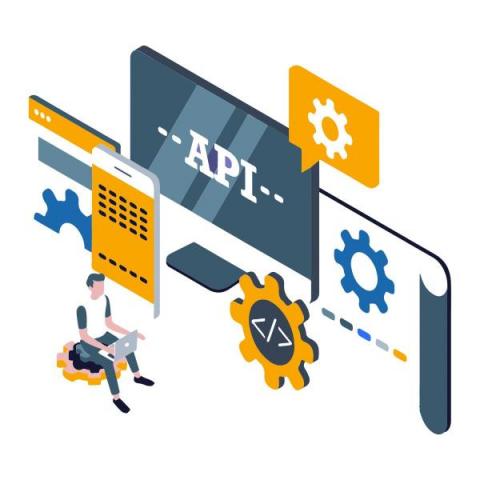
Gin is a high-performance HTTP web framework written in Golang. It contains features and functionalities like routing and middleware out of the box. This helps to reduce boilerplate code, improves productivity, and simplifies the process of building microservices. In this tutorial, I will guide you through the process of building a RESTful API with Golang using the Gin-gonic framework. I will also lead you through building an API to manage the basic details of a company.
Starting with version 16.8, React provides a way to use component and global state without the need for class components. This does not mean that Hooks are a replacement for class components, though. There are some benefits of using class components, which I will describe later in this tutorial.
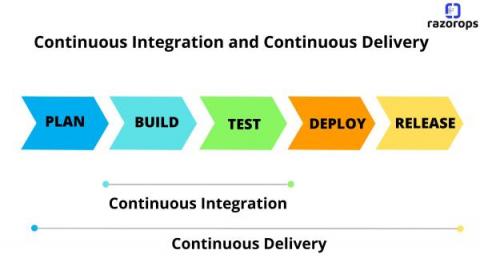
Continuous integration is a DevOps practice, where developers continuously integrate the code changes into a central repository. It most often refers to the build or the integration stage of the software release process. A continuous integration service helps to automatically build and run unit tests on the new code changes to find any errors instantly.
Continuous integration (CI) is a development practice where development teams can make small, frequent changes to code. With an automated build which verified the code each time developers verify their changes into the version control repository. Which helps the development teams to detect any defect in an early stage. Continuous integration is the first part of CI/CD, which enables the development team to release the code changes gradually to production quickly and regularly.
With over 50,000 active organizations and 250 million workflows, CircleCI is one of the most popular networked CI platforms. When getting started with CI pipelines, teams typically want to ensure that code will compile, pass unit tests, and build a container image. After catching these low hanging fruit of syntax errors, engineering teams need to dig much further to find business logic and scalability errors.
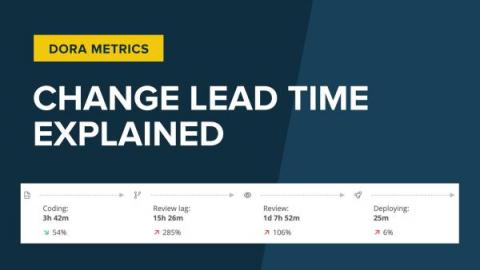
This post is the second in a series of deeper dive articles on the four DORA metrics. The first metric we looked at was Deployment Frequency, which is about how often code can get released to end users. In this second article, we’ll look at Change Lead Time, arguably the metric most familiar to developers.
Most organizations that make software — from small startups to multi-billion-dollar behemoths — use third-party libraries and tools to develop their applications. Modern apps depend on many external components to build and deliver software to customers. These libraries and tools are collectively called the software supply chain. A software supply chain for a typical web app may include components like these.
Axios is a promise-based HTTP library that lets developers make requests to either their own or a third-party server to fetch data. It offers different ways of making requests such as GET, POST, PUT/PATCH, and DELETE. In this tutorial, I will explain how Axios interacts with applications, describe the structure of Axios requests and responses, how to make requests to an API, and how to write tests for your requests using CircleCI.