The latest News and Information on DevOps, CI/CD, Automation and related technologies.
In the ever-evolving landscape of IT, virtualization has established itself as an irreplaceable cornerstone. While various platforms offer virtualization services, Microsoft’s Hyper-V stands out as a robust, scalable, and user-friendly option. If you’re an IT professional, chances are you’ve come across Hyper-V at some point in your career. With its intricate features and multi-faceted architecture, Hyper-V serves as the backbone for many virtualized environments.
Have you ever wondered how to keep your digital assets truly secure in a world where cyber threats seem to evolve quicker than cybersecurity measures? If so, you might want to consider adopting a Zero Trust security model. Far from being a buzzword, Zero Trust has emerged as a holistic approach to cybersecurity that operates on a straightforward principle: “Never Trust, Always Verify”.
Businesses and organisations are increasingly reliant on technology for their operations, the significance of alerting platforms has become paramount. Alerting platforms encompass the processes that enable organisations to acknowledge, respond, and to reduce various types of incidents that can impact their services. Incident alerts enable prompt responses,at the right time and minimise potential damage.
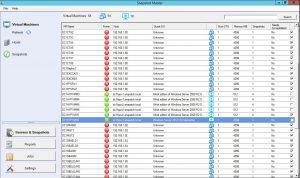
Hyper-V has rapidly become an indispensable tool in the system administrator’s toolkit. Not only does it provide a robust, feature-rich platform for virtualization, but it also seamlessly integrates with Windows Server, making it a must-have for any Windows-based enterprise environment. As a system administrator, you’ve probably realized that managing Hyper-V manually through its GUI can be time-consuming.