The latest News and Information on DevOps, CI/CD, Automation and related technologies.
The software is getting more and more complicated and so is the infrastructure behind it. It is no longer what it used to be with a single web or application server and a database backing it up. Throughout the years, the infrastructure has become more and more complicated. We have multiple databases, queues, datastores, search engines, and configurations. We want to incorporate continuous delivery and automated testing and deploy everything easily.
Welcome to this three-part mini-series on embedded Linux development on Ubuntu. Throughout this series, we will discuss the key challenges of traditional software distribution mechanisms for embedded Linux devices. We will understand why legacy development and update approaches do not suit the Internet-of-Things (IoT) world and assess how Ubuntu simplifies and secures embedded Linux development.
Since its emergence in the mid-2000s, the cloud computing market has evolved significantly. The benefits of reliability, scalability, and reduced set-up costs have created a demand to fuel an ever-growing range of “as-a-service” offerings, resulting in an option to suit most requirements. But despite the advantages, the question of cloud or on-premise remains valid.
On May 11th, at Intel Vision, Densify won Intel Partner of the year for Software Innovation. This award recognizes the impact of our jointly developed offering: Intel Cloud Optimizer (ICO). <="" a=""> Working with Intel we launched a program for enterprise customers that combines Densify analytics software and Intel expert guidance to help match customer workloads with the cloud instances that enable the best performance at the lowest possible cost.
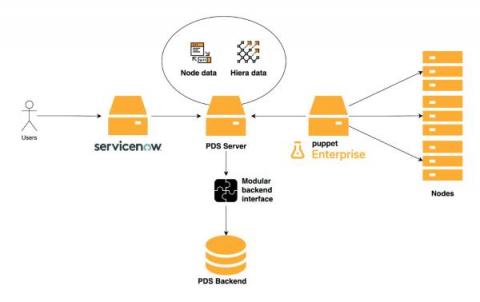
I work on the Solutions Architects team here at Puppet. We are sometimes the first line of defense in solving some of our customers' most challenging or unique problems, and every so often, we see trends in problems that we'd previously considered to be edge cases. For example, cCustomers often ask us two questions: How can we connect external configuration data to Puppet? How can we speed up changing their own configuration for service owners without onboarding them to Git approval processes?