Continuous Software Pipelines: Why Enterprises Are Going Cloud-Native Dev Week Enterprise Open Talk
Your entire tech stack is likely in the Cloud - so why aren’t your software packages?


The latest News and Information on DevOps, CI/CD, Automation and related technologies.
Your entire tech stack is likely in the Cloud - so why aren’t your software packages?
Cyber attacks present an imminent threat to our digital assets. And they come in a variety of ways, including computer viruses, Denial-of-service (DoS), hacking, ransomware, memcached. In February 2022, White House deputy national security adviser for cyber and emerging technology Anne Neuberger claimed that the Russian hackers conducted a DDoS attack on the Ukrainian banks and Ministry of Defense before their military attacks.
Today we are pleased to announce that CircleCI has acquired Ponicode, a Paris-based AI engine for analyzing source code, with the goal to help developers produce better code in their local development environment. Ponicode caught our attention with their dedicated focus to helping developers handle their least favorite tasks — the toil surrounding writing code — such as authoring tests, commenting code, analyzing code quality, and more.
Software engineering teams are continually seeking methods to improve and speed up the software development process. DevOps, an engineering methodology that brings development and operations together, is one popular strategy. Development and operations teams are frequently isolated in traditional engineering companies, which can lead to conflict between these two vital arms.
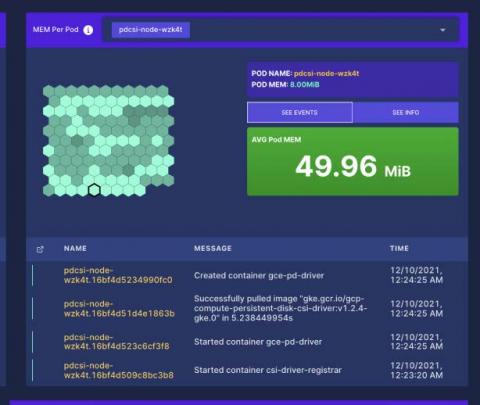
ContainIQ runs all infrastructure on Google Cloud (GKE), and was able to get Speedscale installed within a few minutes. After installing the Speedscale operator, ContainIQ began capturing traffic from the primary gateway where service calls come into a cluster.
There were many reasons people came to use CentOS as an alternative Linux platform to Red Hat Enterprise Linux (RHEL). CentOS was originally built as a downstream release of RHEL, which was free to use without support. CentOS became the de facto standard for many organizations that did not want to use RHEL for production workload, since it’s basically the same thing, just rebranded.