Operations | Monitoring | ITSM | DevOps | Cloud

The latest News and Information on DevOps, CI/CD, Automation and related technologies.

What's New in Rancher 2.6.5?

With KubeCon underway, many of us in the cloud native community are looking forward to learning about the newest innovations from the companies we follow. At SUSE, we’ve been working hard to deliver some new enhancements to Rancher with our 2.6.5 version. I want to briefly take you through the highlights of this release and why we’re excited about these new additions.
Podcast: Break Things on Purpose | Dan Isla: Astronomical Reliability

It’s time to shoot for the stars with Dan Isla, VP of Product at itopia, to talk about everything from astronomical importance of reliability to time zones on Mars. Dan’s trajectory has been a propulsion of jobs bordering on the science fiction, with a history at NASA, modernizing cloud computing for them, and loads more. Dan discusses the finite room for risk and failure in space travel with an anecdote from his work on Curiosity.

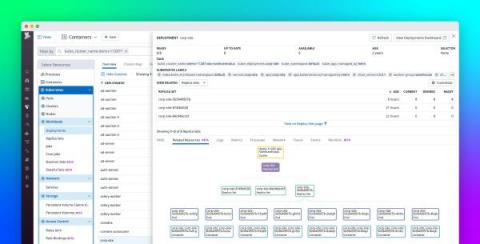
Visualize relationships between your Kubernetes resources with Datadog Live Containers

A Kubernetes environment includes a wide range of resources—such as clusters, nodes, and pods—that work together to run dynamic applications at scale. In order to monitor a Kubernetes application effectively, you need a multi-dimensional view into your clusters’ health that encompasses the complex dependency relationships among these resources.

Ingest OpenTelemetry traces and metrics with the Datadog Agent

OpenTelemetry is a Cloud Native Computing Foundation (CNCF) initiative that provides open, vendor-neutral standards and tools for instrumenting services and applications. Many organizations use OpenTelemetry’s collection of APIs, SDKs, and tools to collect and export observability data from their environment to their preferred backend. As part of our ongoing commitment to OpenTelemetry, we are proud to have contributed our distributed tracing libraries to the CNCF community.

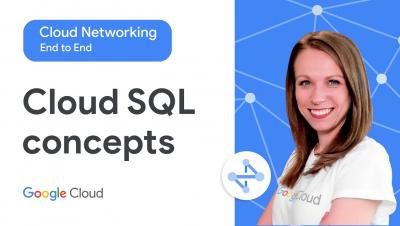
Cloud SQL: Concepts of Networking

Cloud SQL provides a managed service for MySQL, PostgreSQL, and SQL Server databases as well as backups, high availability, maintenance, and so much more! In this episode of Networking End to End, Lorin Price discusses networking concepts from implementation and security to connectivity on Cloud SQL. Watch along to learn about the options for deploying Cloud SQL and tips on how to determine who and what can access your Cloud SQL instance.

Setting Up Custom Event Processing in Moogsoft | Moogsoft Product Videos & How-Tos

After watching this video, you will be able to create a workflow to process events, explain the use of workflows in Moogsoft, and set up an event workflow to normalize event data. Don't forget to subscribe for content on DevOps, Observability, AIOps and more!

How to Choose a Scalable Open Source Time Series Database: The Cost of Scale

When looking for a highly scalable time series database, there are a number of criteria to investigate and evaluate. First up, it’s always a good idea to consider open source software. It’s more likely to have gone through comprehensive troubleshooting, it’s typically more reliable as it has more timely and widespread peer-review, it better guarantees technology independence, it’s easier to find engineers who are familiar with it and it has great security.

Deploying K3s with Ansible

There are many different ways to run a Kubernetes cluster, from setting everything up manually to using a lightweight distribution like K3s. K3s is a Kubernetes distribution built for IoT and edge computing and is excellent for running on low-powered devices like Raspberry Pis. However, you aren’t limited to running it on low-powered hardware; it can be used for anything from a Homelab up to a Production cluster.

Container Cost Management: Allocating Kubernetes Costs The Easy Way

Containers are one of the most popular ways for businesses to deploy applications. They provide an easy method of packaging applications into self-sufficient units that can be used, moved around, and re-used in any number of ways without breaking the overall functionality of your software. With the possible exception of serverless architecture, containerization is perhaps the best way to achieve smooth, seamless application deployment and minimal hassle with updates and application maintenance.