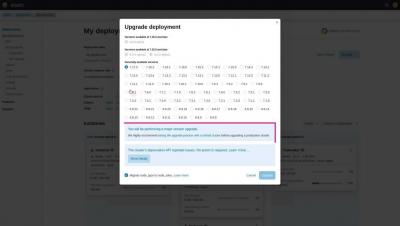
How to upgrade your Elastic Cloud deployment
On Elastic Cloud, you can upgrade your Elastic Cloud deployment to a new version with a few clicks. This video walks you through the upgrade process on the Elastic Cloud console.


The latest News and Information on Monitoring for Websites, Applications, APIs, Infrastructure, and other technologies.
In the realm of employee experience and company culture, there’s no term more ubiquitous than work-life balance. It’s what every job candidate wants and every business promises. But in the years since work-life balance became a ubiquitous selling point, the workplace has changed drastically, and a new concept is starting to supplant work-life balance: work-life integration. The pandemic and coinciding shifts to remote and hybrid work have spurred a deluge of new approaches to working.
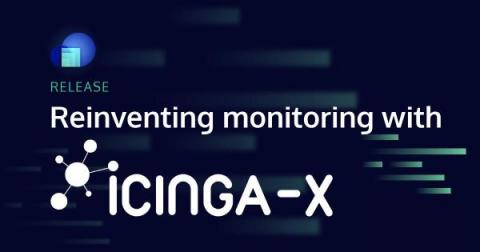
Some would say, it’s “just” a release. We say it’s revolutionary. Never seen before. One of a kind. Exceptional. Why, you wonder? Because we have reinvented monitoring.
While a public status page *does* foster transparency and trust with users, sometimes you just need to save face. And hey, you're a tech behemoth—you can get away with it.
Hybrid mobile applications allow you to incorporate web-based content into your mobile offerings. By embedding webviews inside your iOS or Android app, you can repurpose existing code to build key mobile functionality, such as authentication processing or ad rendering. While hybrid apps can help streamline your development process, they can also make monitoring your system more complex.
Apache Kafka is a very popular open-source distributed event streaming platform used by thousands of companies for high-performance data pipelines, streaming analytics, data integration, and mission-critical applications. Amazon MSK (Managed Streaming for Kafka) is a fully managed Kafka service that makes using Kafka even easier. But how do you get started with Kafka on AWS?
Event ingestion is one of the most mission-critical components at Sentry, so it’s only natural that we constantly strive to improve its scalability and efficiency. In this blog post, we want to share our journey of designing and building a distributed ingestion infrastructure—Sentry Points of Presence— that handles billions of events per day and helps thousands of organizations see what actually matters and solve critical issues quickly.