Operations | Monitoring | ITSM | DevOps | Cloud

The latest News and Information on Observabilty for complex systems and related technologies.

What Customers Are Doing With AI and Honeycomb

At O11yCon, we talked to engineering teams across the industry, and the numbers are starting to get genuinely wild: Mixpanel DevOps Engineer Eddie Bracho told us their engineering team is generating 50% more PRs than before AI came into the mix (sorry). That kind of velocity is exciting, but it's also a pressure test for every part of your stack that isn't writing code, including your observability practice. Here's what we're hearing from customers about how that's playing out.

What Is Agentic Observability? The Complete Guide for Enterprise Engineering Teams

TL;DR Agentic observability uses AI agents to autonomously investigate incidents, identify root causes, and take action in production environments. Unlike traditional monitoring (which alerts and waits) or AIOps (which assists human analysis), agentic platforms conduct the investigation themselves. Key capabilities include autonomous incident triage, evidence-backed root cause analysis, alert noise reduction, and governed remediation.

Instrumenting AI Agents for the Agent Timeline: A Practical OpenTelemetry Guide

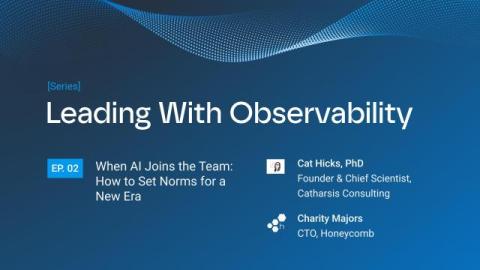
AI agents are nondeterministic, multi-step, and opaque. When one fails in production, "the model said something weird" is the cheapest, most useless line in your incident postmortem. To debug agents the way they actually run, you need telemetry that captures all of it, in order, with enough context to reconstruct what happened. The OpenTelemetry GenAI Semantic Conventions give you a vendor-neutral way to do exactly that.

Why Observability Isn't Enough for AI Coding Agents

Observability platforms collect pre-instrumented logs, metrics, and distributed traces to monitor production systems and surface failures to human engineers. The adoption of AI into engineering has led observability providers to offer those same signals to agents. This is often packaged as AI observability, but the signals themselves were designed around a human investigation loop. AI coding agents work faster, consume data differently, and need feedback as they work rather than after deployment.

Runtime Aware PR Review: Validate Changes in Live Production

Runtime PR review means validating a code change against live variable state, real execution paths, and downstream service behavior before the merge decision. Not after a checkout regression exposes what the diff missed. As AI coding agents ship PRs faster than any reviewer can mentally simulate execution, static analysis and CI leave a structural gap that only runtime evidence can close. This article explains what that gap looks like, why it recurs, and how to close it with runtime context code review.

Full Stack Observability vs Monitoring: Key Differences

Traditional monitoring tracks system health by collecting data such as metrics and logs, this data is checked to see if a system is behaving as expected and alerts are raised if errors or anomalous data values are found. This works well in stable, predictable environments, but modern IT systems are far more complex and dynamic. In distributed architectures like microservices and cloud-native platforms, predefined alerts usually aren’t enough to explain why a failure is happening.