Gunicorn is a popular application server for Python applications. It uses the Web Server Gateway Interface (WSGI), which defines how a web server communicates with and makes requests to a Python application. In production, Gunicorn is often deployed behind an NGINX web server. NGINX proxies web requests and passes them on to Gunicorn worker processes that execute the application.
There are dozens of great languages to learn. Today we’ll be breaking down the differences between two of the best: PHP vs Python. Which one is best for your application? Which is going to give you the best return on your development time? We’ll pit these two head-to-head and find out which is the best choice for you.
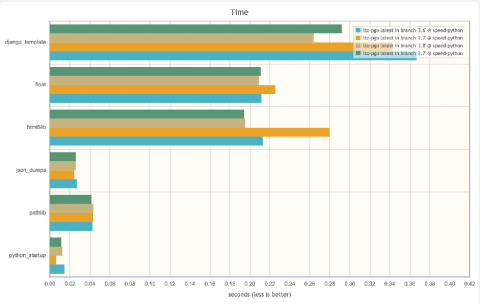
Python powers many applications we use in our day-to-day like Reddit, Instagram, Dropbox, and Spotify. The adoption of Python 3 has been a subject of debate in the Python community. While Python 3 has been out for more than a decade now, there wasn’t much incentive to migrate from the stable Python 2.7 in the earlier releases. If you’re still running on legacy python, it’s high time to migrate as it has reached the end of its life since Jan 2020.
Over the past 24 months or so, I have been studying investing/trading while also working to become more proficient with Splunk. I like to combine activities and gain momentum, so I decided stock market and economic data would be the perfect way to dig deeper into Splunk and hopefully improve my investing/trading. In the beginning, I only looked at it as a way to learn more about Splunk while using data that was interesting to me.
We’re big fans of AWS Lambda at Honeycomb. As you may have read, we recently made some major improvements to our storage engine by leveraging Lambda to process more data in less time. Making a change to a complex system like our storage engine is daunting, but can be made less so with good instrumentation and tracing. For this project, that meant getting instrumentation out of Lambda and into Honeycomb.
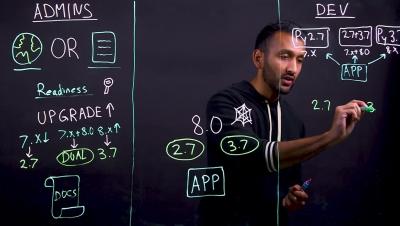
We’re excited to release version 7 of the Datadog Agent. It has all of the same functionality as Agent 6, but it is the first version to ship with only the Python 3 runtime. With Python 2 reaching its end of life on January 1, 2020, migrating your services to Python 3 will ensure that they continue working as expected. We’ve tested all of our more than 350 integrations to ensure they work with Python 3.
Data pipelines and analytics tooling have become essential parts of modern businesses, so why are error monitoring and observability tooling for data tools still 10 years behind modern application development? Logs are just not good enough to make sure you can quickly and efficiently debug your errors.