Operations | Monitoring | ITSM | DevOps | Cloud

AI Agents Need Guardrails: Building Autonomous IT with Resolve Agent Lab | Agents of IT

AI agents are moving fast. For enterprises, the bigger question is how to make them useful, trusted, and safe enough to take action. In this episode of Agents of IT, Zach Austin and Ian Coppock unpack what it takes to move from experimenting with AI to operationalizing agentic AI across the enterprise. They explore why organizations are racing to deploy AI before defining the problems they want to solve, why governance and scoped responsibilities are critical, and why the real value of AI comes from fixing and orchestrating the workflows underneath it.

Why we stopped hiring for the skills we used to hire for

Six engineers, two QA, a product owner and a Scrum Master used to be a normal squad. With today's tooling, that's bloat. Teams are being rebuilt around three people. Not because the work got smaller — because agentic tooling absorbed the parts that needed all those hands. The engineer's job shifts from writing the code to directing the agents that write it, and owning the outcome that comes out the other end.

7 lessons for IT leaders on using observability to monitor AI applications

What it takes to prove AI value with LLM observability Over six months, the Elastic IT team ran internal AI applications that returned $2.5 million in operational time to the business.1 A conversational support assistant moved us from zero digital resolution, where anything complex became a ticket, to 30% of support interactions closing without one.

The infrastructure work you should not have to touch just to ship a feature

You wrote the feature. It works locally. Then you spend the next two hours on things that have nothing to do with the feature: a Terraform plan that wants to replace a database you didn't touch, a Kubernetes manifest that needs a new ingress rule, an IAM policy that's one permission short of what the deploy needs. None of this is the job. All of it is the job today. Here's what that list actually looks like, and why none of it should be sitting on your plate.

Trust you can verify: security assurance for the AI era

When you choose a cloud platform, you're entrusting a provider with sensitive business information, customer data, critical applications, and a growing share of your operational resilience. Increasingly, you are also entrusting it with AI. And that changes the questions you should be asking. Marketing claims cannot answer these questions. Independent evidence can. Here is what that evidence looks like at Upsun and why it matters to your next supplier review.

Harness Announces Capabilities that Enable Security at Machine Speed | Harness Blog

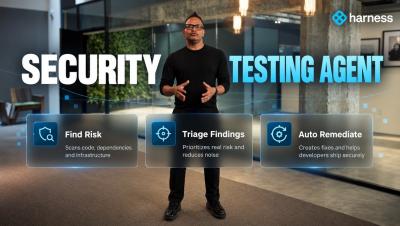
Vulnerabilities used to move at human speed. A researcher found one, disclosed it, and defenders had days - sometimes weeks - to respond before it was weaponized in the wild. That window is gone. According to the Edgescan 2026 Vulnerability Statistics Report, it still takes an average of 55 days to fix a vulnerability - but the Zero Day Clock shows attackers going from disclosure to first exploit in as little as 6 hours.

A Guide to Downsampling Time Series Data with InfluxDB 3

Summary Downsampling turns high-frequency time series data into lower-resolution summaries. In InfluxDB 3, you can calculate those summaries by querying with SQL or materialize them on a schedule with the Python Processing Engine. Table of Contents This tutorial demonstrates both approaches using the InfluxDB 3 Processing Engine’s built-in bird tracking simulator plugin. You will generate telemetry, aggregate it into 10-second windows, and validate the result with SQL.