Operations | Monitoring | ITSM | DevOps | Cloud

Sponsored Post

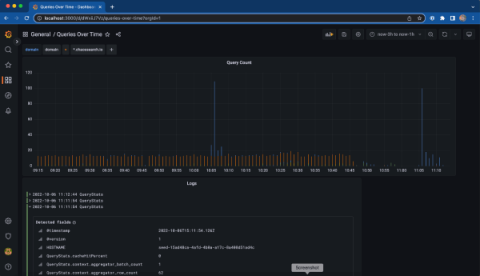
Tutorial: How to Use ChaosSearch with Grafana for Observability

In my last blog post, Building a Cost-Effective Full Observability Solution Around Open APIs and CNCF Projects, we introduced using ChaosSearch in combination with the most popular open source front- and back-ends in the application observability space. In case you missed it, the TL;DR version is that you can use a variety of open source projects and open API-based components to build the best-of-breed observability stack of your choice rather than relying on expensive, all-in-one solutions.
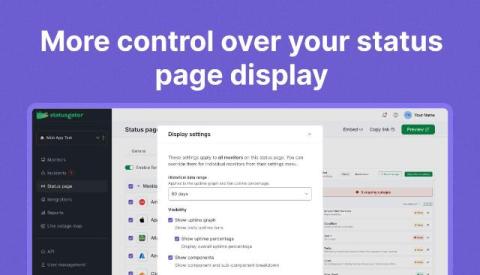
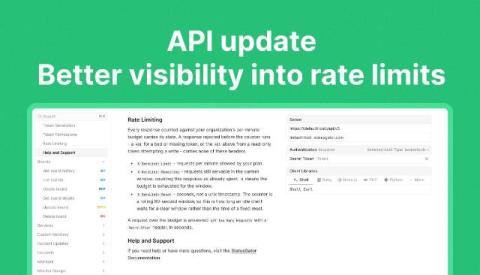
API update: Better visibility into rate limits

We’ve updated the StatusGator API v3 to help you see how many requests your integration can make and handle rate limits more smoothly. Responses that count toward your organization’s per-minute limit now include three headers: If a request exceeds your limit, the API returns 429 Too Many Requests and a Retry-After header telling your integration how many seconds to wait before trying again.

Devart Data Access Components add support for the latest IDEs and database platforms

The latest update to Devart Data Access Components is here, bringing support for RAD Studio 13 Florence Release 2, Lazarus 4.8, Microsoft SQL Server 2025, MySQL 9.7.x, and NexusDB 4.75.20. The release also introduces new security and authentication capabilities, along with improvements to transaction management, database connectivity, data handling, and performance.

6 Best Code Review Platforms for Jira Teams (2026)

Code review in a Jira-centric workflow can become a bottleneck fast. Pull requests pile up, context gets lost between your Git host and your issue tracker, and reviewers spend time switching tabs instead of reading code. The right code review platform should connect Git activity directly to the issues you’re tracking.

Don't Wait for Code Black Keep Patient Care Online

In April 2026, a cybersecurity incident at Signature Healthcare Brockton Hospital affected information systems across the health system. The hospital activated downtime procedures, diverted ambulances, and temporarily canceled chemotherapy infusion services. Nine days later, it lifted its Code Black status, although some systems and processes still required restoration. In September, Luminis Health reported a cybersecurity incident that left certain systems unavailable.

Juggling AI tools works, until it does not

This isn't a teardown. This stack is a genuinely reasonable way to start. An AI-first editor handles day-to-day writing. A terminal-based coding agent takes on tasks that need more autonomy: a full feature, a migration, a stubborn bug. A few scripts connect the pieces, trigger a run, and post a result somewhere. An observability tool checks what happened after the fact. Every part of that is a real, capable tool. For the first few months, on a small team, it works.

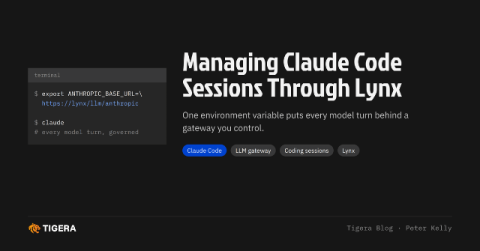
Managing Claude Code Sessions Through Lynx

At Tigera, we spend a lot of time thinking about agent security: identity, policy, runtime controls, and the record left behind after an agent acts. Coding agents create an interesting problem because, in most organizations, they didn’t arrive through the front door. Few companies ran a platform evaluation and rolled Claude Code out to 500 developers. Developers installed it themselves.

What is Interactive Application Security Testing (IAST)?

Interactive Application Security Testing (IAST) finds vulnerabilities in running applications by monitoring code from the inside. Learn how it works and where it fits. Interactive Application Security Testing (IAST) is a method for finding security vulnerabilities in an application while it's running, by instrumenting the code and observing how it behaves during normal use or testing.