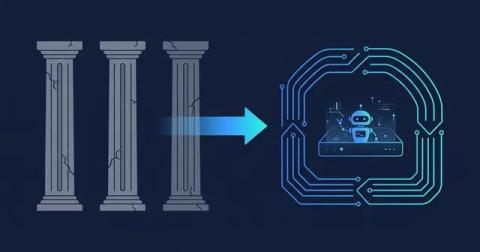
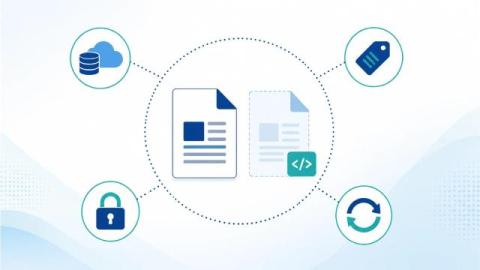
Microsoft starts deleting departed users' OneDrive, mail, and Teams data within 30 days. The 2026 guide to archiving leavers, reclaiming licences, and avoiding the auto-archive bill.
Every retailer knows that personalization drives revenue. The evidence has been consistent for years: personalized experiences convert better, retain customers longer, and generate higher average order values. What has changed is the scale and sophistication at which personalization is now possible - and the gap it creates between brands that embrace AI-driven approaches and those still relying on manual rules and static segments.
The most frustrating sentence in modern engineering is no longer "it works on my machine." It is: "It worked in the playground." When an LLM-powered feature, such as a RAG-based search, an autonomous agent, or a dynamic prompt engine, fails in production, it doesn’t throw a standard stack trace. It returns "slop," hallucinations, or silent retrieval failures. Standard debugging workflows fail during triage because LLM hallucinations cannot be reproduced using static mocks or clean seed data.
You've seen the screenshots-overnight Bitcoin wins and same-day flips on EUR/USD. So where's the real money for a first-year trader: crypto or forex? The blunt math says most newcomers lose. According to a 2025 industry survey, 84% of first-year crypto traders finish in the red. Public filings from top EU forex brokers show roughly 72% of new retail accounts lose capital in their first twelve months. The market you pick isn't a shortcut; beating those odds requires skill, discipline, and a plan.
For over a decade, the narrative of premium interactive entertainment has been defined by a single, immovable object: the high-end PC tower. It was the centerpiece of the "battlestation," a glowing monolith of silicon and cooling fans that anchored a player to a specific desk in a specific room. If you wanted the best textures, the highest frame rates, and the lowest input lag, you simply had to be there.
When you run a business, to be successful there are a few things you have to do. One of these things is ensuring you are always pushing to progress and develop. By always working towards the future, it helps you stay on top and not fall behind - if you start falling behind, it can be tough to turn things back around, as mentally you may have been affected.
Dozens of SaaS services you depend on, starting from Google Workspace and Slack to Shopify, may experience downtime, partial outages, or degraded performance. And most have their own status pages, APIs, or RSS feeds. Juggling all these sources is exhausting, and many teams suffer from alert fatigue, missed early warnings, and fragmented visibility.
Even a brief outage in a critical service can disrupt projects. Customers get frustrated and flood the support team with tickets. What's the solution? Centralizing incident notifications and real-time status alerts in Slack. Many teams already collaborate there anyway. So let's take a look at how teams can streamline service monitoring, alerting, and incident workflows in Slack using integrations, automation, and tools like StatusGator.
Most founders have a build problem. Very few have solved the distribution problem. That gap is where startups die. When someone comes to me with a startup idea (and this happens more than you’d think), I always ask the same question first.