Reliable systems are vital to meeting customer expectations. Downtime not only hurts a company’s bottom line but can be detrimental to reputation. Our goal at Gremlin is to help enterprises build more reliable systems using Chaos Engineering. Whether your infrastructure is deployed on bare metal in a corporate-owned data center or as Kubernetes-orchestrated microservices in a public cloud, chaos experiments can help you find system weaknesses early, before they affect customers.
Your payment systems have slowed to a crawl, customers are getting impatient and abandoning their shopping carts both online and in stores, and you’re losing money every minute this problem goes on. Behind the scenes, technical responders are scrambling to resolve the issue before it impacts more customers—and before even more money is lost.
A while back I talked about how big companies have started using serverless in production and how this is a clear sign that we will see more implementation of the serverless infrastructure in the near future. I’d like to take some time today and talk about one of the companies that are using serverless in production: Coca-cola.
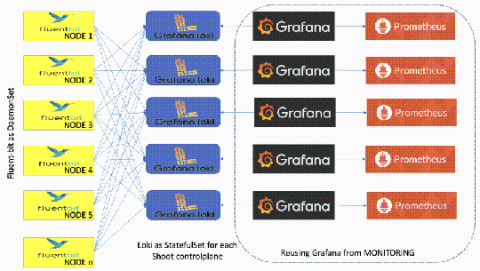
Kristian Zhelyazkov is a developer at SAP working on Gardener, the SAP-driven Kubernetes-as-a-service open source project. In this guest blog post, he explains why the project is moving its logging stack to Loki.
In 2019, the Netdata team already knew that a Netdata Cloud solution in the form of an online platform would greatly complement Netdata’s distributed monitoring by making it much easier to organize large infrastructures and by enabling new ways for teams to collaborate. The old node registry available at the time wasn’t enough for Netdata’s users. Building an online platform, even one that does not directly process users’ metrics, is challenging.