Operations | Monitoring | ITSM | DevOps | Cloud

What's new in security for Ubuntu 21.04?

Ubuntu 21.04 is the latest release of Ubuntu and comes at the mid-point between the most recent Long Term Supported (LTS) release of Ubuntu 20.04 LTS and the forthcoming 22.04 LTS release due in April 2022. This provides a good opportunity to take stock of some of the latest security features delivered in this release, on the road to 22.04 LTS. Ubuntu 21.04 brings with it a vast amount of improvements and features across a wide variety of packages.

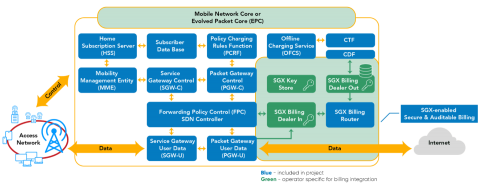
Introduction to open source private LTE and 5G networks

It’s so easy these days to set-up your own WiFi network. You order a router online, plug it into the electrical socket, define a password and you’re good to go. WiFi is fast, reliable and easy to use. But if you want to cover a wider area or connect hundreds of small devices it quickly becomes inefficient and expensive. Is the only way to go to your local mobile network operator and sign a contract? No! Thanks to open source technology, you can build your own LTE or 5G network.

The State of Robotics - April 2021

Together we have reached the end. Two partners, two allies, two distributions that supported millions of innovators have reached their end-of-life (EOL). April will be remembered as the month where ROS Kinetic and Ubuntu Xenial reached EOL. ROS Kinetic is one of the most used, widely deployed and extensively contributed ROS distributions (1st with 1233 repos in ros/rosdistro). Released in 2016, it supported newer related components, notably Gazebo 7 and OpenCV 3, and this month has reached its end.

OpenStack CentOS alternatives:7 reasons to migrate to Ubuntu

Looking for OpenStack CentOS alternatives after recent changes in the CentOS project? Think Ubuntu – the most popular Linux distribution for OpenStack deployments, after CentOS, across development and production environments. Wondering what makes Ubuntu different? Here are seven reasons you should consider Ubuntu when planning your CentOS migration.

Fintech AI/ML on Ubuntu

The financial services (FS) industry is going through a period of change and disruption. Technology innovation has provided the means for financial institutions to reimagine the way in which they operate and interact with their customers, employees and the wider ecosystem. One significant area of development is the utilisation of artificial intelligence (AI) and machine learning (ML) which has the potential to positively transform the FS sector.

What is KFServing?

TL;DR: KFServing is a novel cloud-native multi-framework model serving tool for serverless inference. KFServing was born as part of the Kubeflow project, a joint effort between AI/ML industry leaders to standardize machine learning operations on top of Kubernetes. It aims at solving the difficulties of model deployment to production through the “model as data” approach, i.e. providing an API for inference requests.

Deploying Mattermost and Kubeflow on Kubernetes with Juju 2.9

Since 2009, Juju has been enabling administrators to seamlessly deploy, integrate and operate complex applications across multiple cloud platforms. Juju has evolved significantly over time, but a testament to its original design is the fact that the approach Juju takes to operating workloads hasn’t fundamentally changed; Juju still provides fine grained control over workloads by placing operators right next to applications on any platform.