Operations | Monitoring | ITSM | DevOps | Cloud

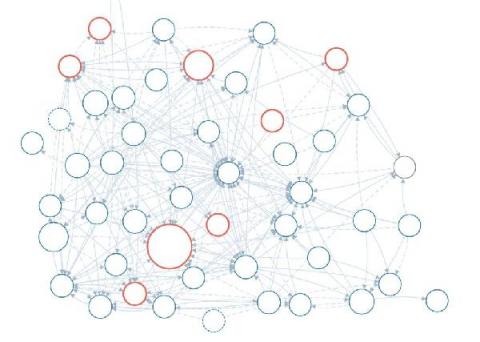
Service Map & Dashboards (beta) Provide Insight into Health and Dependencies of Microservice Architecture

With almost every blog you read about monitoring, troubleshooting, or more recently, the observability of modern application stacks, you’ve probably read a statement saying that complexity is growing as a demand for more elasticity increases which makes management of these applications increasingly difficult. This blog will be no exception, but there’s a good reason for that: we just enabled the first Sumo Logic customers with powerful new tools to tackle these exact challenges.

How Clorox leverages Cloud SIEM across security operations, threat hunting, and IT Ops

During Sumo Logic’s Illuminate user conference, Heath Hendrickson, senior security architect at the Clorox company, and Gary Conner, senior threat protection lead, presented how they are leveraging Sumo Logic across security operations, threat hunting, IT operations, and more.

How to monitor Amazon Aurora RDS logs and metrics

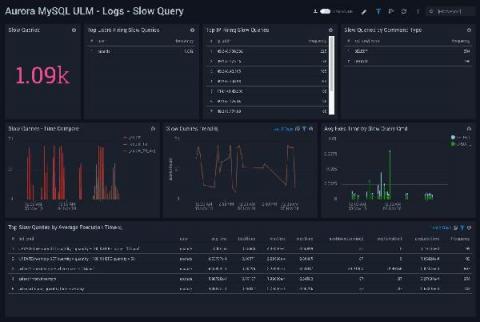
Aurora, a hosted relational database service available on the Amazon cloud, is a popular solution for teams that want to be able to work with tooling that is compatible with MySQL and PostgreSQL without running an actual MySQL or PostgreSQL database. In order to leverage Aurora’s benefits fully, it’s critical to log and analyze the various types of monitoring data that are available from an Aurora environment.

Recommendations for monitoring SolarWinds supply chain attack with Sumo Logic Cloud SIEM

The global security community recently learned of a supply chain attack against SolarWinds via their Orion® Platform. In this blog we are providing recommendations for Sumo Logic customers to gain a deeper understanding of how to utilize available Indicators of Compromise (IOCs) within our Cloud SIEM offerings to determine your exposure to the attack. Additionally, we’re sharing targeted search recommendations from our Sumo Logic Special Operations (or SpecOps) threat hunting team.

Automatic correlation of FireEye red team tool countermeasure detections

Sumo Logic has reviewed the announced breach on December 8, 2020 by FireEye and their subsequent public release of over 300 countermeasure rules. We are continuing to analyze the available information and would like to share this update to all existing and prospective customers interested in how our Sumo Logic services can assist with this development.

Application Performance Management for Microservices with Sumo Logic

Distributed tracing allows you to track the execution of your user's transactions by following them between applications’ microservices. It provides easy to understand visualizations of transactional lifespan with the ability to pinpoint any slowdowns and errors in response to microservices. During my presentation at Illuminate, I shared that we extended the Sumo Logic platform to cover application performance use cases.

How to Monitor Amazon Redshift

Amazon Redshift is a cloud-based data warehousing solution that makes it easy to collect and analyze large quantities of data within the cloud. Cloud data warehouse services like Redshift can remove some of the performance and availability pain-points associated with on-premises data warehousing, but they are not a silver bullet. Getting the most out of Redshift requires carefully monitoring Redshift clusters in order to identify stability issues and performance bottlenecks.

Building your modern cloud SIEM

SIEM has traditionally earned itself a bad reputation as an unwieldy and unmanageable tool that really never lived up to its promises. In my presentation during Illuminate, I talked about what Sumo Logic is doing to modernize log analytics and SIEM as a whole. Today, we see that despite how overall technology is accelerating, security always seems to lag behind. In Sumo Logic, we address this head-on.

Monitoring Microsoft SQL Best Practices

For decades, Microsoft SQL has been a leading relational database solution within Windows-based environments. The extension of Microsoft SQL support to Linux servers in 2017 made the platform even more popular. There’s a good chance that, no matter which types of infrastructure or servers you manage, there are Microsoft SQL databases residing somewhere on them. That’s why it’s critical to understand the fundamentals of Microsoft SQL monitoring.