Operations | Monitoring | ITSM | DevOps | Cloud

How do you measure software health?

Just like personal health, software health is best managed proactively so you can prevent issues before they occur and avoid costly, stressful outages. Cortex helps you track and improve the health of your software with Scorecards and Initiatives. Scorecards quantify software health by aggregating data from multiple sources to give you a continuous view into the health of your system. Initiatives use Scorecards to drive organizational improvement.


Using Cribl Search to Aid in Threat Hunting by Enriching Data in Motion

Cribl Search is reshaping the data search paradigm, empowering users to uncover and analyze data directly from its source. Cribl Search can easily reach out and query data already collected in Amazon S3 (or S3 compatible), Amazon Security Lake, Azure Blob, Google Cloud Storage, and more. By searching data where it lives, you can dramatically speed up your search process by avoiding the need to move data before analyzing it.

Got Ghosts in Your Enterprise Network?

Shining a light on the dark corners of the new enterprise network doesn't have to be as scary or overwhelming as some think. While “ghost issues” typically lurk in these sometimes unexplored places on the internet or in cloud environments, during this Halloween season your network operations teams can gain the confidence to not only uncover these network ghosts, but compel and cast them out forever.

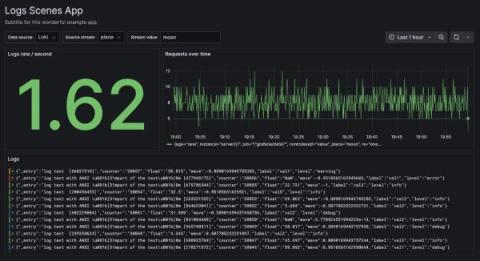
Create a logs app plugin with Grafana Scenes and Grafana Loki

Grafana’s plugin tools help developers extend Grafana’s core functionality and create plugins faster, with a modern build setup and zero configuration. Grafana Scenes, meanwhile, is a new front-end library, introduced with Grafana 10, that enables developers to create dashboard-like experiences — such as querying and transformations, dynamic panel rendering, and time ranges — directly within Grafana application plugins.

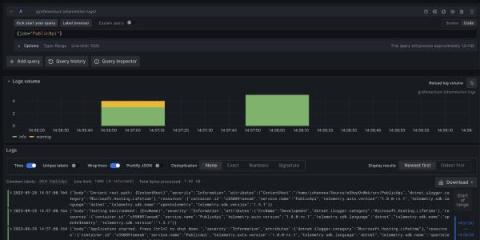
How to configure OpenTelemetry .NET Automatic Instrumentation with Grafana Cloud

For those who have limited experience with OpenTelemetry, it can be intimidating to instrument.NET applications. But the OpenTelemetry community created a welcome shortcut with the first stable release of.NET Automatic Instrumentation. It simplifies the process of collecting metrics, logs, and traces from your.NET applications, without applying any changes to the source code or adding any dependencies to the OSS project.

AppSignal Monitoring Available for Python Applications

We're happy to announce that AppSignal now offers monitoring tools for Python projects. AppSignal helps you get the most out of your Python application's monitoring metrics, with additional support for multiple Python frameworks and packages such as Django and Celery. In this article, we'll walk you through some of our core features to show you how to power up your Python application with AppSignal.

Harnessing PowerShell to Optimize SharePoint Online Management

In the realm of collaborative digital environments, SharePoint Online emerges as a quintessential platform fostering seamless interactions, data sharing, and project coordination among teams. As part of the Microsoft 365 suite, it encapsulates a rich array of features tailored to meet the diversified needs of modern organizations.

Meeting the SEC's New Cybersecurity Rules: How Flowmon Empowers Public Companies To Comply

The much-anticipated cybersecurity rules by the U.S. Securities and Exchange Commission (SEC) for public companies have arrived, signaling a significant step forward from the proposed rules released in March 2022. These final rules, effective July 26, 2023, introduce new obligations that public companies must adhere to, promising a more secure and transparent corporate landscape. However, these regulations bring significant compliance challenges and litigation risks.

Replay messages in Azure Service Bus dead-letter queue

When working and dealing with asynchronous messaging patterns – in this case, using Azure Service Bus – depending on the requirements, you will find many scenarios when you need to reprocess messages. Sometimes, a message failed because a system was offline for a certain period, there was a bug with the service, and we needed to resend specific messages and many other reasons.