Although the title of this blog poses the question “Why do Monitoring Service Thresholds Overlap?”, really the question should be: “In Remote Monitoring and Management Solutions, Why Do Some Monitoring Service Thresholds Overlap?”. That’s a bit of a mouthful, but it’s what I’m going to look at in this blog. Here’s why overlapping thresholds in remote monitoring matter.
As you may have already discovered (or will soon encounter), many vendors that offer uptime monitoring solutions charge a setup fee. But instead of seeing this as a legitimate cost, you should view it as stop sign. There are three reasons why.
As modern software systems become increasingly distributed, interconnected, and complex, ensuring production reliability and performance is becoming harder and more stressful. Seemingly nondescript changes to our infrastructure or application can have massive impacts on system uptime, health, and performance, all while the cost of production incidents continues to grow.
It’s official, summer is over. So grab yourself a pumpkin-spiced food item of choice and check out what the Sentry team has been up to this past month. From introducing new features, product improvements, and integrations, we can objectively say we made Sentry at least a smidge better this month. Keep reading to see how the latest developments can make your debugging experience less painful.
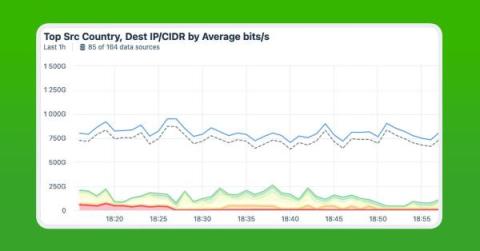
CloudWatch can be a great start for monitoring your AWS environments, but it has some limitations in terms of granularity, customization, alerting, and integration with third-party tools. In this article, learn all the ways that Kentik can supercharge your AWS performance monitoring.
Using Grafana Cloud to manage and monitor even your most sensitive data from your AWS services just got easier. If your organization’s workloads are hosted in AWS and you are using a Grafana Cloud instance that’s also hosted in AWS, you can now use AWS PrivateLink to establish a secure connection between your virtual private cloud (VPC) network and Grafana Cloud for all your data.