Today we’re announcing our new Spend Allocation feature and updates to Spike Protection, giving you more control over how your projects consume events. While we’ve made it super easy for teams to add Sentry to their projects, we kept hearing from the community that they wanted more guardrails to ensure their noisy projects don’t eat through their event quota.
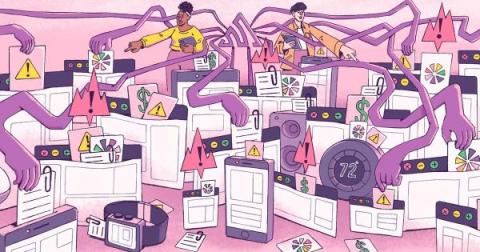
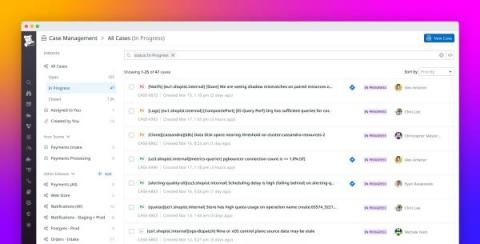
Complex systems require many different monitors to assess the health of their infrastructure and applications, creating a wealth of alerts that can be hard to track. Due to a lack of effective triage processes, many organizations page engineers for every alert that comes in, making it difficult to separate false positives from issues that actually require immediate attention.
Observability originated in the field of engineering and has recently gained popularity in the world of software development. Put simply, observability refers to the ability to understand the internal state of a system based on its external outputs. IBM defines it as follows: As systems have become more complex, often including remote elements in cloud-based systems, management of the systems and troubleshooting faults and downtime have also become more complex.
In today’s fast-paced world of software development, DevOps professionals strive to provide high-quality and dependable services for their users. An essential aspect of achieving this objective is understanding and effectively managing service level indicators (SLIs), service level objectives (SLOs) and service level agreements (SLAs). These metrics help guarantee that a service meets its performance and reliability targets.
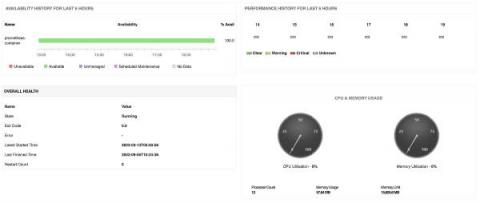
Docker is a well-known open-source platform that is predominantly employed to bundle applications and their dependent components into containers for easy development and deployment. Docker is lightweight and efficient in resource consumption by operating as an executable packaged software with all the necessary framework, libraries, code, runtime, and files required to run an application.
IT operations management manages the day-to-day operations of an information technology (IT) department. The goal of IT operations management is to ensure that the department runs smoothly and efficiently while meeting the needs of the business. However, ITOM can be a challenge, as there are several factors to consider. IT operations management has been encountering a few challenges recently, mainly due to the evolving dynamics set off by the COVID-19 pandemic. The IT landscape has been changing rapidly, and operations staff feel pressure to keep up. They are also challenged by the complexity of the current IT landscape and the need to shore up their resources with enterprise support and infrastructure.