Operations | Monitoring | ITSM | DevOps | Cloud

8 Top Status Page Tools: Keep Your Users Informed and Your Services Up

Free status page tools and open source status page tools became a valuable tool to keep users on track with the status of tasks and problems. However, countless self hosted, accessible, and open source status page platforms are available. Open source status page tools are crucial for notifying internal employees of threats and connecting with end users.
How do you migrate your application to the cloud for the first time?

You don’t have to be an expert to deploy your application to the cloud - 24% of Cloud 66 customers used a PaaS like Heroku in the past and cut their bills by up to 60% after moving to the cloud. Additionally, they gained more control over their own infrastructure and more flexibility in their deployments.

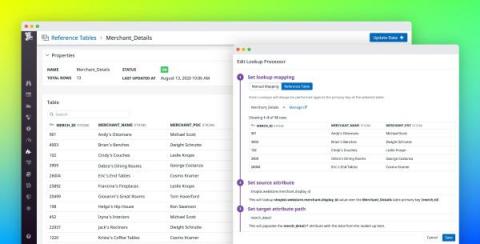
Add more context to your logs with Reference Tables

Logs provide valuable information for troubleshooting application performance issues. But as your application scales and generates more logs, sifting through them becomes more difficult. Your logs may not provide enough context or human-readable data for understanding and resolving an issue, or you may need more information to help you interpret the IDs or error codes that application services log by default.

Tracing Services Using OTel and Jaeger

At observIQ, we use the OTel collector to collect host/container-level metrics and logs from our systems. But to get more detailed monitoring of our applications (APM), we use the OTel SDK and instrumentation libraries. This post aims to provide a quick start to setting up tracing exporting to a local Jaeger instance.

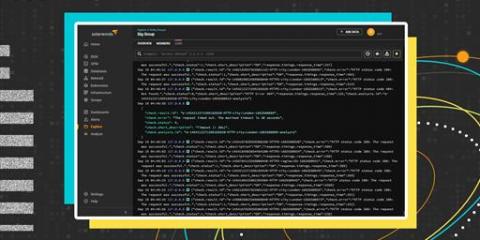
Log Analytics: Everything To Know About Analyzing Log Data

Log data is big data! But that’s not why it’s such a big deal. Log data can be really useful if you know what to do with it — which is where log analysis and analytics comes in. Let’s take a look at this valuable activity, starting with what log data can tell us and moving into how we can use analytics to inform business practices. (This article was written in collaboration with Muhammad Raza.)

Get a Sneak Peek with Operator Preview in Cribl Search

At Cribl, we understand precisely what challenges our customers face when running complex searches, and the importance of getting exactly what they need with their queries. Cribl Search’s latest feature, Operator Preview, allows data analysts to test search operators without committing to a full search. It saves time, reduces costs, and streamlines your everyday data analysis.

Why the visibility gap is holding your IT operations back

Depending on your business, MTTR stands for mean time to repair or mean time to recovery – but it can also mean resolution, resolve, or restore. No matter how you define it, the basic measurement is the same: it’s the time it takes from when something goes down to when it is back and fully functional. This includes everything from finding the problem to fixing it. For ITOps teams, keeping MTTR to an absolute minimum is crucial.

Log Management in the Age of Observability

The explosive growth of interconnected data across distributed systems has disrupted traditional development, DevOps, and ITOps practices and forced many organizations to rethink their cloud strategies. Higher-velocity feature development and more responsive support requests involve developers throughout the delivery cycle and require them to monitor and observe application behavior before releasing it to production.

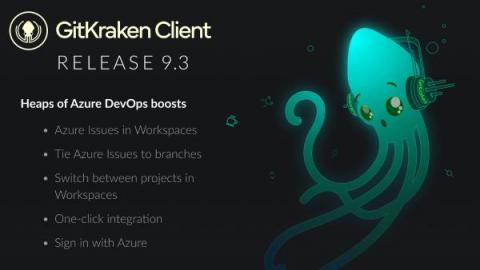
GitKraken Client 9.3: Skip the Corporate UI and Stay in That Sweet GitKraken Dark Theme

This release is all about improving our Azure DevOps integration. According to our super sea-cret metrics, Azure DevOps is our users’ third most popular Git hosting service, after GitHub and Bitbucket. That explains why so many of you have sent in support tickets or submitted feature requests to make the integration with Azure match the excellent experience users have with our Bitbucket, GitHub, and GitLab integrations.