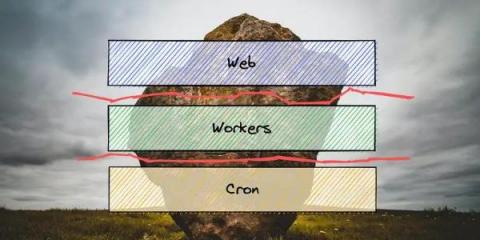
I’m a big fan of monolithic architectures. Writing code is hard enough without each function call requiring a network request, and that’s before considering the investment in observability, RPC frameworks, and dev environments you need to be productive in a microservice environment.
Logging in Kubernetes can help you track the health of your cluster and its applications. Logs can be used to identify and debug any issues that occur. Logging can also be used to gain insights into application and system performance. Moreover, collecting and analyzing application and cluster logs can help identify bottlenecks and optimize your deployment for better performance.
Today is a special day at Sentry, as today we welcome Syntax to the family. We’ve long been fans of Scott and Wes, of what they’ve built with Syntax, and of their general curiosity, drive, and hustle. As one of Sentry’s earliest partners, it’s been amazing to watch and experience their growth alongside our own. Today we’re going to talk about the next chapter of Syntax, one with increasing ambition, and one we hope you’ll be just as excited about as we are.
The AWS CDK lets users build as Infrastructure as Code (IaC) reliable, scalable, and cost-effective applications in their cloud environments. With the AWS CDK, developers can use various supported programming languages to create constructs (reusable cloud components) and compose them together into stacks and applications.