An introduction to Redis
Aiven for Redis® Join us as we take a look at all of Redis's ins and outs.


A recent ESG/ISSA survey highlighted that security professionals are overwhelmed with competing proprietary data standards and integration challenges. Today’s security landscape often comprises dozens of tools, each with its own unique format. Even if the format is defined and widely adopted, like Syslog, implementations vary widely from tool to tool, or even from release to release for the same tool. How big of a problem are these differing data formats?
Organizations have this tendency of buying expensive equipment, they think that it enhances the efficiency with which their employee perform their tasks. But they don't keep track of their assets. Maintenance of these costly assets is equally important to keep their efficiency up. Negligence of these tasks can lead to major asset failure, increased downtime, asset misplacement, asset theft, and so on. No organization will want to be in a situation like this.
How are you tracking the long-term operation and health indicators for your micro and macro services? Service Level Indicators (SLIs) and Service Level Objectives (SLOs) are prized (but sometimes “aspirational”) metrics for DevOps teams and ITOps analysts. Today we’ll see how we can leverage SignalFlow to put some SLOs Error Budget tracking together (or easily spin up same with Terraform)!
Classically, the space of observability lies within layers of information on a dashboard. It operates by using the fundamental trio of data — metrics, logs and traces — from each layer of the environment to assess the health of an IT infrastructure. However, a time component is critical, making the stack observable at any point in time. Gathering reliable data and insights into your IT infrastructure remains the primary role of observability tools and services.
Applications are built and run by many people and made of many components: infrastructure, code pipelines and end users to name a few. Understanding the status of those components and teams is never straight forward. In this blog, we will be unpacking the problem faced by most organizations and taking a look at how SquaredUp can empower you and your organization with status visibility across different teams / components / services – all in one view.
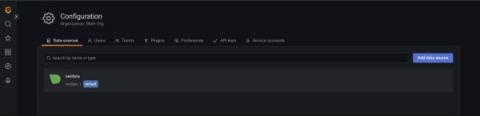
The open-source community is about to benefit greatly from Netdata’s new Grafana data source plugin, which makes use of a powerful data collection engine. This new plugin maximizes the troubleshooting capabilities of Netdata in Grafana, making them more widely available. Some of the key capabilities provided to you with this plugin include the following.