Although we’ve encouraged employees to take plenty of time off this summer to relax, recharge, and enjoy time with family, Cribl certainly hasn’t been on a summer holiday as a company. After the big announcement in late May with Cribl Search and our Series D funding round, we moved right into the announcement of Cribl Stream 3.5, Cribl Edge 3.5, massive upgrades to Cribl.Cloud, and the launch of our Cribl Certified Observability Program.
Load balancers and content delivery networks (CDNs) are critical tools for delivering modern, cloud-native applications. They play essential roles in ensuring the smooth flow of data between applications and end-users. If you don’t have both a load balancer and a CDN in place, you’re probably in a poor position to guarantee the uptime of your application across a wide geographic area. That does not mean, however, that load balancers and CDNs do the same thing.
DevOps has never been more popular than it is today. Since first popularized nearly 15 years ago by Patrick Debois and Gene Kim, DevOps has become the standard approach for managing IT. In this blog post, we’ll look at key trends and data that paint a picture of today’s State of DevOps. You can learn more about the history and fundamentals of the topic in our article What is DevOps and why is it important?.
When Grafana started in 2014, its main goal was to be a great dashboarding solution for Graphite. Around the same time, the Prometheus project started to gain steam, but it wasn’t clear whether it should be added to Grafana. After all, Grafana was a Graphite frontend, it was uncertain at the time if Prometheus would take off in popularity, and it would take resources away from the core purpose of why Grafana was created.
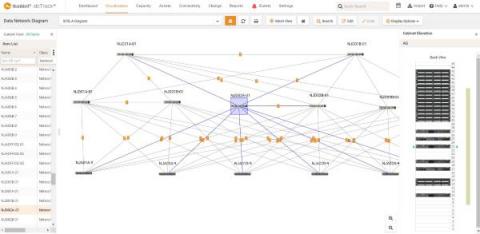
We’re proud to announce the general availability of dcTrack® 8.2, the latest version of Sunbird’s DCIM Operations software. This release includes exciting new features including a ticket connector to drive automation via integration, automatic data network diagrams for remote visualization, and asset audit via barcode scanning.
The world is increasingly digital. The U.S. Census Bureau estimates e-commerce grew 14.2% from 2020 to 2021, for a total of $870.8 billion in sales. And just look at the trends in remote work. According to a FlexJob and Global Workplace Analytics report, remote work has grown 44% over the last five years and an astonishing 159% over the last 12. Indeed, much of America relies on a slew of digital apps and services to get business done every day. So what does this mean for businesses?