Operations | Monitoring | ITSM | DevOps | Cloud

5 Reasons Why Your Company Should Invest in Legal Software Development Services

The legal landscape is changing at an extraordinary pace, and law firms that fail to keep up risk falling behind. Legal software development services have emerged as a critical investment to navigate these changes, offering substantial benefits beyond simple technology upgrades. This article provides a comprehensive overview of the myriad advantages that legal software development can bring to your firm, highlighting five key areas where these investments can drive significant value.

Top tips: Wearable tech etiquette in the workplace

Top tips is a weekly column where we highlight what’s trending in the tech world today and list ways to explore these trends. This week, we’re exploring wearable tech etiquette at the workplace. Prioritizing face-to-face human connection is practically nonexistent at this point, making it difficult to nurture collaborative environments. Picture yourself entering a public setting like a restaurant, a busy train, or your workplace. What do you see?

Proactive vs. Reactive Website Monitoring

In today’s digital age, the reliability and performance of your website are more critical than ever. Understanding the nuances of website monitoring is key whether you’re part of a bustling DevOps team or a Site Reliability Engineer working to ensure seamless user experiences. This blog post dives into the two primary monitoring strategies: proactive and reactive. We’ll compare these approaches, discussing how each can influence your site’s uptime and user satisfaction.

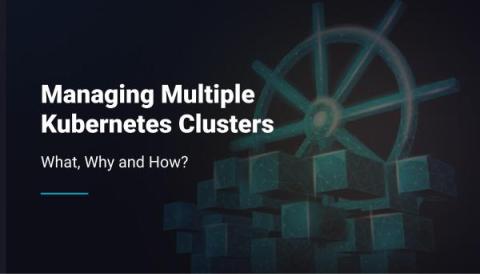
Managing Multiple Kubernetes Clusters: What, Why and How

Kubernetes is a powerful tool for deploying and managing containerized applications. However, managing its clusters is a critical but challenging task for many organizations. Today, we will discuss the benefits of managing multiple clusters, and the challenges they present, and offer a quick technical guide on managing these clusters efficiently.

What is Dragonfly?

Discover the power of Dragonfly: Scalability, resilience, and real-time messaging. Uncover the benefits of this cutting-edge in-memory data store solution now! Dragonfly is a performant and memory-efficient drop-in replacement for Redis®, utilizing a modern multi-threaded shared-nothing architecture. That’s it! In essence, we have already captured the ambitious mission of Dragonfly.

Don't Redo the Work: How to Migrate OS the Easy Way

So, you think you want to migrate OS (AKA operating systems)? In (most) everyone’s life there comes a time where you look toward migrating to another operating system. There are a variety of reasons why — take for instance the recent trouble with CentOS and RedHat. This process change has broadened adoption of new Enterprise Linux variants like Rocky, Alma Linux, or even Ubuntu.

Why companies choose Grafana Cloud for their hosted observability platform

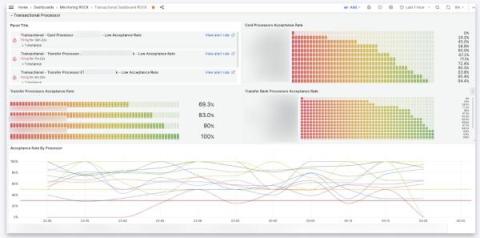
Three different businesses, one shared problem: SailPoint, Kushki, and Flexcity were all looking for a hosted solution to help them optimize their telemetry storage, gain more insights from their observability strategy, and keep costs manageable. But what they gained from migrating to Grafana Cloud and working with Grafana Labs was much more. “The engineering team is super sharp. They’re experts. This is the best of the best," said Omar Lopez, head of the observability team from SailPoint.

Enhancing Data Ingestion: OpenTelemetry & Linux CLI Tools Mastery

While OpenTelemetry (OTel) supports a wide variety of data sources and is constantly evolving to add more, there are still many data sources for which no receiver exists. Thankfully, OTel contains receivers that accept raw data over a TCP or UDP connection. This blog unveils how to leverage Linux Command Line Interface (CLI) tools, creating efficient data pipelines for ingestion through OTel's TCP receiver.

Colo Rental Rates are Rising: Are You Keeping Track of Your Power Utilization?

It’s getting more expensive to rent space in colocation data centers. According to CBRE, colocation rates are up 18.6% year-over-year to a record $163.44 per kW/month due to limited supply and strong demand. Average Asking Rental Rate with Y-o-Y % Change for Primary Markets *Rental rates are quoted asking rates for 250-500 kW at N+1/Tier III requirements. Image Source: CBRE Research, CBRE Data Center Solutions, H2 2023.