The State of DevOps Report finds a clear link between documentation quality and an organization’s ability to meet its performance goals.
Grafana creator Torkel Ödegaard will never forget the very first GrafanaCON in 2015, when he shared some big news with the audience gathered in New York City. “I’ll always remember standing on stage and announcing that we just reached 12,000 instances and being super proud because it was just a couple of months after we started tracking these numbers,” says Torkel, who also launched Grafana Labs with co-founders Raj Dutt and Anthony Woods in 2014.
Cybersecurity remains a key concern for any organization. The cost of cybercrime is expected to rise to $8 trillion in 2023 and reach $10.5 trillion by 2025. Various cybersecurity solutions are available, with Firewall as a Service (FWaaS) emerging as one of the most valuable assets when it comes to protecting your interests. We will investigate FWaaS solutions, how they work, how they're different from traditional firewalls, and what benefits they can provide for a range of organizations.
Quickly: if you’re interested in observability for LLMs, we’d love to talk to you! And now for our regularly scheduled content: In early May, we released the first version of our new natural language querying interface, Query Assistant. We also talked a lot about the hard stuff we encountered when building and releasing this feature to all Honeycomb customers. But what we didn’t talk about was how we know how our use of an LLM is doing in production!
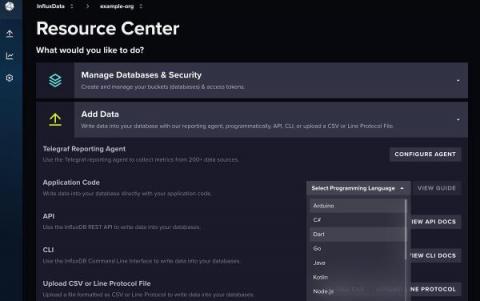
InfluxDB 3.0 is a versatile time series database built on top of the Apache ecosystem. The 3.0 product suite includes two cloud-based versions: InfluxDB Cloud Serverless, and InfluxDB Cloud Dedicated. For the purposes of this post, InfluxDB Cloud refers to these specific versions of InfluxDB. This post provides an update on the status of the client libraries for InfluxDB Cloud, as well as all the available resources to get started querying and writing data to InfluxDB.
Today, businesses and organizations rely heavily on metrics and analytics to make informed decisions. Metrics are important whether you’re a developer, a marketer, or the head of a company. One type of metric that is widely used is a time-series metric. Time-series metrics provide insights into how data changes over time. With time-series data, businesses can track trends, detect anomalies, and make predictions.
Today, we are pleased to announce the release of CFEngine 3.22.0! The focus of this new version has been coordination. This is a non-LTS (non-supported) release, where we introduce new features for users to test and give feedback on, allowing us to polish before the next LTS.(CFEngine 3.24 LTS is scheduled to release summer 2024).