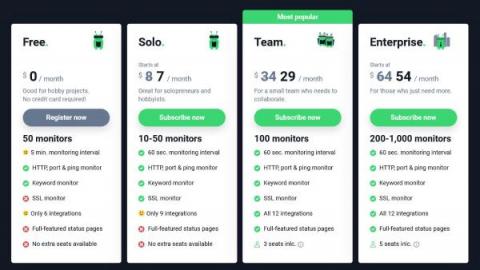
December 2022: We are introducing Sub-users and new plans!
Hey there, We’re excited to announce that the highly anticipated sub-users feature has finally launched!🚀


The latest News and Information on Monitoring for Websites, Applications, APIs, Infrastructure, and other technologies.
Hey there, We’re excited to announce that the highly anticipated sub-users feature has finally launched!🚀
To enhance user experience, avoid data loss, and guard against security vulnerabilities, frontend errors must be handled properly. In this post, we'll cover the most common types of frontend errors and best practices for handling them. We'll also explore how to use the popular error monitoring platform Rollbar to track and manage errors.
When enterprises run online services, web servers play an essential role. They allow the software to surface on the world wide web and make it accessible through web browsers for customers worldwide. When the performance of a web server gets degraded or, even worst, if a web server is entirely down, it impacts not only the business bottom line but also the brand image for not providing reliable service to customers. Failure to manage web servers can also lead to security risks.
Welcome back! In the previous blog, we discussed what AIOps is and the significant role it plays in ITOps with our panelists: Carlos Casanova, Principal Analyst at Forrester, and Gowrisankar Chinnayan, head of product management at ManageEngine. In this blog, I am going to walk you through the rest of our discussion. Our talk revolved around the reasons why organizations should adopt AIOps.
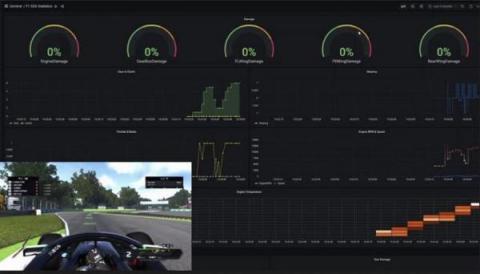
For Formula 1, speed is about more than just how fast you go around the track. It’s also about having data at your fingertips in real time to make critical improvements before, during, and after the race. “Formula 1 is one of the most fascinating data-driven sports,” said Anshul Sharma, Senior Product Manager at Microsoft. “It’s so competitive that even one tenth-second advantage can change the outcome of the race.”
You’ve made the decision to implement a centralized log management solution because you know that it’s going to save you time and money in the long term. However, to get the most bang for your log management buck, you need to understand how the different parts of your log management deployment work. Once you understand each resource, you can implement a more efficient log management architecture.
Everyday when you come into work, you’re bombarded with a constant stream of problems. From service desk calls to network performance monitoring, you’re busy from the moment you login until the moment you click the “shut down” option on your device. Even more frustrating, your IT environment consists of an ever-expanding set of network segments, applications, devices, users, and databases across on-premises and cloud locations.
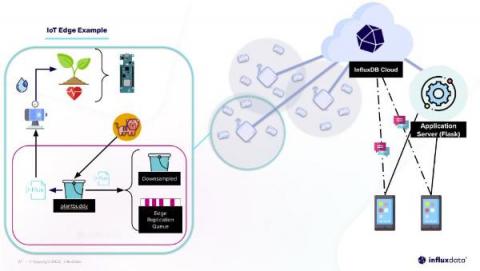
If you’re new to InfluxDB you might wonder, “Why does InfluxDB have its own query and scripting language (aka Flux)?” You might also be thinking, “InfluxDB has client libraries. Why and when should I use the Python client library and when should I use Flux?” In this post we’ll discuss when developers should use Flux and when they should use Python for developing their IoT applications.