The latest News and Information on Monitoring for Websites, Applications, APIs, Infrastructure, and other technologies.
At Seniorlink, we provide services and technology to support families caring for their loved ones at home. In the past two years we’ve expanded our programs across the United States, and so our need to observe our application systems has grown too.
Most everyone has some source of information on the health of their environments. Your experts know where to go and what to do when you get those cryptic messages and log files. To those content with the deep knowledge and where events and log files supply you with everything you need, I applaud you – you belong to a rare breed. Combing through logs or events takes time and effort, and rarely does it yield the speediest “return-to-service” solution.
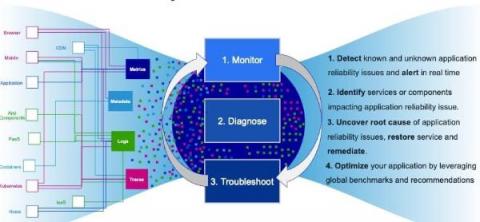
Kubernetes is the de-facto platform for orchestrating containerized workloads and microservices, which are the building blocks of cloud-native applications. Kubernetes workloads are highly dynamic, ephemeral, and are deployed on a distributed and agile infrastructure. Although the benefits of cloud-native applications managed by Kubernetes are plenty, Kubernetes presents a new set of observability challenges in cloud-native applications. Let’s consider some observability challenges.
The content delivery network (CDN) has been an integral part of application infrastructure for more than two decades. A CDN is critical to the end-user experience, but it is no longer considered to be just a caching server. It has evolved to provide security from cyber threats, including DDOS attacks along with front end optimization. Although CDN services are now an indispensable part of any application infrastructure, visibility into CDN performance remains limited.
With Elastic 7.14, the filestream input, the successor of log input, is now generally available in Filebeat. This new, superior input provides better support for reading active log files, with faster reaction time when there is backpressure in the system, quicker registry updates, better cooperation with external log rotation tools, and more.