Operations | Monitoring | ITSM | DevOps | Cloud

Organizing Devices for More Efficient Classrooms

Modern classrooms rely on digital tools for daily lessons. Teachers handle dozens of screens every morning. Managing these tools takes clear planning and solid structure. Cluttered spaces create unnecessary stress for students and staff. Stacking laptops on open tables leads to tangled cords and damaged screens. A clear storage plan keeps the room safe and ready for learning.

Use AI and traffic replay to test AI-generated code

When I ask an AI agent to change code, I also want it to run the application and test what it changed. Asking it to write some tests is a start. But if it invents the expected responses from the same assumptions it used to write the code, those tests can miss the same mistake. Traffic replay gives the agent something concrete to test against: requests and responses captured from a working application.

The Death of the Search Bar

I don't remember the last time I actually searched for something. Not in the way I used to, anyway. There was a time when having a question meant opening a search engine, typing a few words, staring at a page full of links, opening three or four of them, reading contradictory answers, deciding which one sounded believable, and eventually coming to a conclusion of my own.

24/7 On-Call Coverage With a Small Team

Running 24/7 on-call coverage with a small team is first of all an arithmetic problem, and most teams avoid doing the arithmetic because the answer is uncomfortable. There are 168 hours in a week. Your engineers work roughly 40 of them. Somebody has to be reachable for the other 128, and if you have four engineers, that somebody is each of them, one week in four, thirteen weeks a year.

Cron Job Monitoring: Catch Silent Failures

Cron job monitoring is the part of observability most teams skip until a backup turns out to have stopped running three weeks ago. A web server that falls over generates errors, trips a threshold and pages someone inside a minute. A nightly job that quietly stops running generates nothing at all. There is no error rate to alert on, no latency spike, no failed health check. There is only an absence, and absence is invisible to almost every monitoring setup by default.

Google Calendar On-Call Rotation Template

Most teams building an on-call rotation template in Google Calendar get the first two steps right and the third one wrong. Creating a shared calendar is easy. Inviting the team is easy. Expressing "four people, one week each, forever, handing off Monday morning" as a set of recurring events is where it falls apart, usually into a mess of one off entries that someone has to rebuild by hand every quarter.

SSL Certificate Expiry Alerts in Slack

Certificate expiry is the most predictable outage in all of infrastructure. The date is printed inside the certificate. You can read it ninety days ahead. Nothing about it is a surprise, and yet SSL certificate expiry alerts remain one of the most common gaps in otherwise mature monitoring setups, and expired certificates keep taking down production systems at companies with serious engineering teams.

How Traceroute Works and How to Read Its Output During an Outage

Users report that an internal application has gone slow, the server dashboards look normal, and the network group says nothing changed on their side. So where between the user and the application does the time actually go? Much of that answer comes from traceroute. The command lists every router a packet crosses on the way to its destination, with a timing figure set against each one. Arguments about ownership then come down to a single device on a single route.

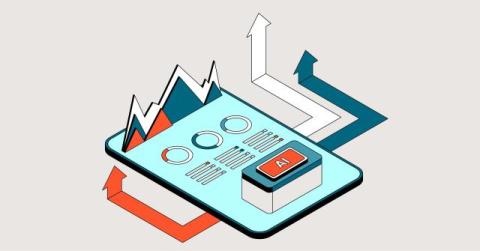
From a $60K invoice to a $200B earnings call, few can explain the AI bill

CloudZero’s own AI Economics Pulse for September found the 75th percentile of its 430-company customer panel crossed 10% of its cloud bill on AI for the first time in August. Gartner’s latest survey found only 22% of organizations have scaled AI successfully and 11% don’t know what their own function spent on it last year. CJ Gustafson showed what that gap looks like on an actual invoice this week.

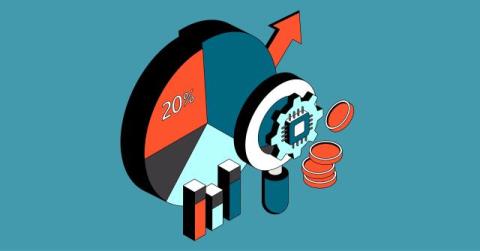
150+ AI statistics for 2026: spend, cost, and AI ROI

Worldwide AI spending will reach $2.59 trillion in 2026, up 47% from 2025, according to Gartner. Yet only 37% of organizations report any earnings impact from AI, McKinsey finds. These AI statistics cover what companies spend, what AI costs to run, and the ROI they're actually getting. That gap between the two headline numbers is the story of AI in 2026.