Operations | Monitoring | ITSM | DevOps | Cloud

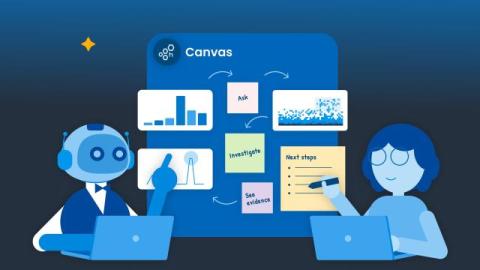
Explore for Spans: One View with Infinite Depth

It’s 20 minutes into a P0 incident, and you have already switched between four different tools, re-authenticated twice, and translated queries across three incompatible syntax languages. The root cause you are searching for. Well, that is still out there somewhere. The reality of investigative latency is that most engineering teams face navigation problems, not data problems. During high-pressure incidents, teams lose cognitive momentum due to context switching between disconnected telemetry silos.

Building a Defensible AI Compliance Framework

Organizations have moved past theoretical conversations about AI adoption. Models, agents, and autonomous workflows are entering production environments. Business leaders are optimistic about potential gains in efficiency, decision support, and operational scale. Yet beneath this momentum, compliance and risk teams feel a different pressure.

StatusHub Q1 2026: SolarWinds Integration, Status API Preview & CloudFest Insights

In Q1 2026, we introduced a new SolarWinds Observability integration, started preparing the upcoming Status API for release, and spent time learning directly from MSPs at CloudFest 2026 about the operational challenges shaping modern incident communication.

Run your first microbuild in 5 minutes

AI coding agents produce code faster than most teams can validate it. Without a validation step between the agent and CI, every problem gets caught after the push, and feedback arrives long after the agent has lost context. Agents need consistent feedback while they’re working so that small failures get fixed locally and CI stays focused on moving code into production.

Measure the real impact of AI coding tools on software delivery with Datadog AI Impact

Engineering teams have rapidly adopted AI coding tools, but organizations still struggle to understand their impact. Existing dashboards focus on activity, such as daily active users, acceptance rates, or lines of generated code, but these metrics don’t answer a more important question: Are teams actually shipping more, faster, and with fewer issues?

Your agent can't fix what it can't see

Agents are getting better and better at fixing bugs. They’re even getting better at testing their work, thanks to headless browsers, sandboxes, simulators, etc. But what about the bugs that only show up once you bring in different browsers, languages, extensions, internet speeds, and all the other variables that get mixed in the second you ship to prod? Or all the bugs that only show up when you account for… well, humans being humans and doing weird stuff you didn’t expect them to do?

How to Reduce Help Desk Demand (Hint: It's Not a Help Desk Issue)

Most IT organizations are trying to reduce help desk demand the same way they have for years: by making the help desk itself more efficient. They improve routing, tighten SLAs, expand self-service, and add AI into the support flow. These changes can make the queue move faster, but they do not stop the work from arriving in the first place. The same problems keep finding their way back to IT. Employees lose time to slow devices, unreliable apps, failed updates, access issues, or confusion after a rollout.

What Is Internet Congestion and How to Fix It

Your VoIP calls are choppy. File uploads are crawling. Your team is complaining that the CRM is sluggish, and remote desktop sessions keep freezing. You check your firewall, your switches look clean, and there are no alerts on your LAN. The problem isn't inside your network. It's upstream, and it's happening quietly every day during peak hours.

Preview launch: the Agent Impact Leaderboard and the Business Impact & ROI Dashboard

The Agent Impact Leaderboard and the Business Impact & ROI Dashboard are live in preview inside GitKraken Insights today. We built them because the questions engineering leaders are getting asked about AI shifted faster than the tools to answer them. Here’s what shipped and how to get access.

Operator now has Long-Term Support (LTS) version

VictoriaMetrics Operator has been developing at a neck-breaking pace, bringing numerous improvements, features, and fixes to our community. We usually make at least a single release every two weeks. While this rapid iteration cycle is great for delivering fixes and improvements quickly, it can be challenging for administrators managing critical production environments.