Operations | Monitoring | ITSM | DevOps | Cloud

Shai-Hulud style attacks need more than scanning

Pre-install scripts mean a malicious package can compromise a developer's laptop the moment it's pulled – no build, no deploy, no install required. That breaks the old model where scanning catches a bad package after the fact, when it's already too late. The fix is active policy enforcement at the point of pull, using signals like package age, signed provenance, and maintainer trust to filter out malicious packages before they ever land.

OpenSearch 3.6: Agentic Applications Meet Long-Term Support

TL;DR OpenSearch 3.6 makes agentic search production-ready, with the AI-powered Launchpad provisioning full search apps in minutes and faster default vector search, and it's the first LTS release, bringing 18+ months of guaranteed support, SBOMs, and an upstream-first commitment (every fix goes back to the main project) so teams get fast-moving open source and a stable, supported platform at once.

IPoDWDM Router Solutions: A Modern Approach to Network Architecture

The relentless growth of data traffic, driven by cloud services, high-speed residential broadband, 5G mobility, and enterprise digitalization, places enormous pressure on network infrastructure. Service providers and large enterprises must scale capacity while simultaneously controlling costs and reducing operational complexity. In this environment, traditional network architectures are reaching their breaking point, creating an urgent need for a more efficient and integrated approach to transport.

Making agentic token costs visible in production

In some organizations, high token counts have become a proxy for productivity. Some engineering teams are being pushed to max out context windows and wire in sprawling tool sets. More tokens can mean better agent reasoning and richer context during development, but token costs compound in production. Tokens accumulate across sessions, users, and tool calls in ways that are easy to overlook. Datadog’s 2026 State of AI Engineering report quantifies the scale of this problem.

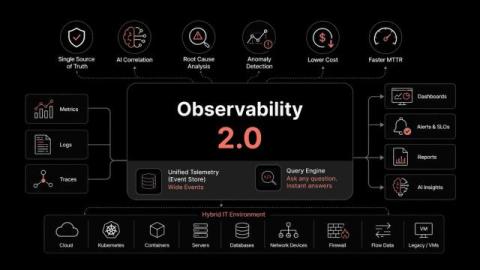
What Is Observability 2.0? Meaning, Key Features, and How to Adopt It

How many tools does your team need to answer one question about production? For most enterprise IT teams the honest count is four: a metrics dashboard, a log analyzer, a tracing tool, and the spreadsheet where someone stitches the other three together during an incident. Each of those tools stores its own copy of the truth and sends its own bill.

Smart City Monitoring: How Network Visibility Keeps Cities Online

What happens when a city's traffic signals freeze at rush hour and nobody in the operations center knows why? For the teams running a connected city, that gap between a failure and its first clue is the worst place to be. Smart city monitoring closes that gap. It gives operators a live view of every network, device, and service the city runs. A fault gets caught and traced before citizens ever feel it. Without that visibility, small problems stay hidden until they spread.