Success Story with iOPEX
Bala speaks on his success with iOPEX and what keeps him going.


The biggest business story of last year was how suddenly and completely the COVID-19 pandemic changed the ways we work and live. Organizations had to look at how they operate, adjust to a hybrid workforce, and further embrace digital transformation. ServiceNow has been at the forefront of the employee experience awakening. As new challenges emerge, our platform is perfectly suited to respond quickly to market-shifting events so that your workforce can stay productive.
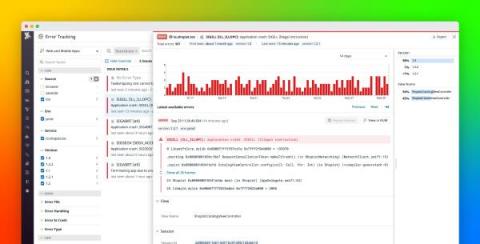
Unsurprisingly, application crashes due to fatal errors can be a major pain point for iOS users. Recent research shows that roughly 20 percent of mobile application uninstalls were due to crashes or other code errors. As a developer, it’s paramount to manage this potential churn by capturing comprehensive crash data in order to track, triage, and debug recurring issues in your iOS apps.
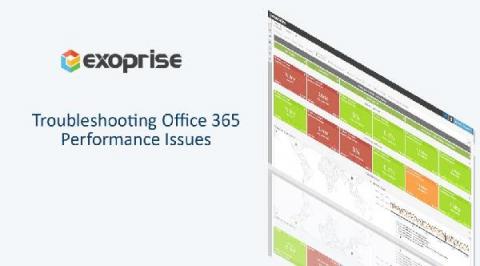
Do you often ask yourself the question - Is there an Office 365 problem today? While you try to find the answer, your customers (end-users) complain because they can't access their business applications. Apart from all this, your boss needs an immediate status update. Trust me. It doesn't feel great to be in that situation. And we know it. Despite Microsoft claiming to provide 99.9% SLA, issues will occur with the Office 365 applications such as Teams, Outlook, OneDrive, Exchange Online, SharePoint, Yammer, etc. Often, the issues aren't even Microsoft's problems but an ISPs or internal network change. There can be lot of reasons (Network, OS, browser, personal device, upgrade errors, Internet, and much more), but which one is it?
It has been argued that automation in the workplace tends to be misunderstood. Analysts are keen to point out that, despite myths to the contrary, automation isn't going to put most people out of work, for instance. Nor is AI going to become a real substitute for actual human intelligence. These are compelling arguments for rethinking the way we think about automation in general. But you can take the points further if you analyze the impact of automation on specific domains, such as cybersecurity. Indeed, automation is perhaps nowhere more misunderstood than in the realm of cybersecurity. To prove the point, here are five common myths about automation's impact on security, and why they're wrong.