Operations | Monitoring | ITSM | DevOps | Cloud

From SysAdmin to SRE: How to evolve your skillset

Are you wondering what it takes to become an SRE from a SysAdmin background? Our latest blog, covers the growth areas and technical skills needed to successfully transition to an SRE role. The last decade has seen widespread adoption of SRE practices based on the best practices laid out by Google. Many SysAdmins have observed this trend and are now evaluating becoming SREs. Which gives rise to the question how much of a skills overlap is there between an SRE and a SysAdmin?

DevOps 101: Introduction to CI/CD

When you’re new to an industry, you encounter a lot of new concepts. We tend to use a lot of jargon, the documentation may be written with someone more experienced in mind or rely on contextual knowledge of the rest of the space, and it often doesn’t explain the “why” for the tool. This can make it really difficult to get your feet underneath you on an unfamiliar landscape, especially for junior engineers.

Kubernetes GitOps with Rancher Continuous Delivery

As the number of Kubernetes clusters under management increases, application owners and cluster operators need a programmatic way to approach cluster management. Rancher CD solves this by creating a git driven engine for applying cluster changes. Declarative code is stored in a git repo. As changes are committed to the repo, linked clusters are automatically updated. Gitops keeps all your clusters consistent, version controlled, and reduces the administrative burden as you scale.

CFEngine 2020 Retrospective

2020 is nearly over, and we’d like to take a couple of minutes to reflect on our year as well as provide a sneak peek into what you can expect from us in 2021. Although it has been a year full of distractions, the CFEngine team has continued to make significant strides when it comes to product improvements and new features that help our users.

How to monitor an Oracle database with Prometheus

In this article, we will explain how to monitor an Oracle Database with Prometheus using an exporter to generate metrics. Also, we will review the main metrics that you should monitor on resource usage and performance, and what to alert on to detect issues and incidents in your Oracle Database.

New Open Access with SquaredUp 5.0

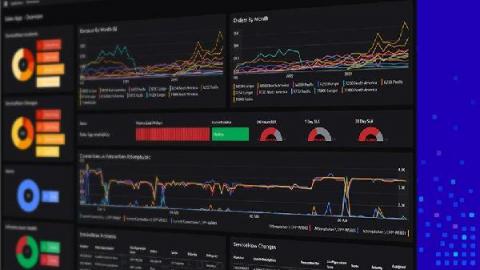
Our Open Access feature enables easy, and unlimited sharing of dashboards across your organization – with any audience at all. A highly popular feature, these shared dashboards help you bring better visibility and collaboration – conveying the shared “truth”! With our latest release SquaredUp 5.0, we have made Open Access dashboards fully interactive, like the rest of our dashboards, so you can see that next level of detail you’ve been wanting.

With the new AWS IoT SiteWise plugin, you can visualize and monitor your equipment data in Grafana dashboards

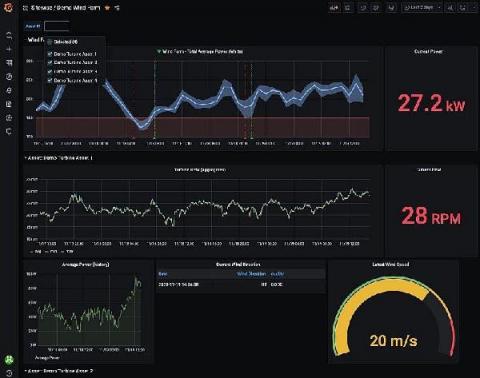
In collaboration with the AWS team, we have just launched another AWS integration, the AWS IoT SiteWise plugin for Grafana. AWS IoT SiteWise is a managed service that helps users collect, store, organize, and monitor data from industrial equipment, across facilities, at scale.

What the Google Outage Can Teach Us About Our Own Services

This week, the world stopped for a few hours as Google users experienced an outage on a massive scale. The outage affected ALL services which require Google account authentication. This includes the Google Cloud Platform (Cloud Console, Cloud Storage, BigQuery, etc.), Google Workspace (Gmail, Calendar, Docs, Drive, etc.) and Google Classroom. With the myriad of affected platforms, this particular outage was far from passing by unnoticed by users.

Manual steps in parallel groups available for Pipelines

Bitbucket Pipelines now allows steps with a manual trigger to be used in parallel groups, satisfying one of the highest voted feature requests. This feature provides more flexibility in Pipelines, allowing teams to configure pipelines with multiple options and then only run the steps they actually need to run, at the time they want. For example you can choose which environments should be deployed for individual developers, giving them different environments to test and do their work.

Announcing Harvester: Open Source Hyperconverged Infrastructure (HCI) Software

Today, I am excited to announce project Harvester, open source hyperconverged infrastructure (HCI) software built using Kubernetes. Harvester provides fully integrated virtualization and storage capabilities on bare-metal servers. No Kubernetes knowledge is required to use Harvester. In the past few years, we’ve seen many attempts to bring VM management into container platforms, including our own RancherVM, and other solutions like KubeVirt and Virtlet.