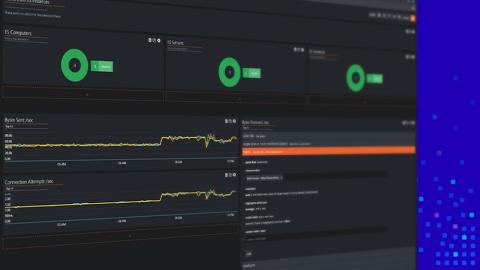
Exoprise Featured in Solutions Review Guide for Network Monitoring Tools
Performance measurement with best-in-class synthetics for enhanced visibility and improved productivity.


Monitoring your application can be a difficult task if you’re just getting started with it. You need to know which metrics matter most and understand which ones you can combine into meaningful graphs. In the (not just holiday ⛄️) spirit of making things smoother for our users, we’ve added a magic dashboard to the Ruby integration that shows you the volume of emails you are sending with ActionMailer.
At SquaredUp, we are all about dashboards and visualizations that enable you to build the ideal single pane of glass. If you work in monitoring, you know that designing the perfect dashboards that give you all of your important metrics at a glance, is easier said than done. Most of the time, it takes several attempts to optimize a dashboard for easy reading, and more often than not, this step is neglected. I wouldn’t recommend skipping over this step though.
Persistent connections allow HAProxy to optimize resource usage, lower latency on both the client and server side, and support connection pooling. HTTP is a layer 7 protocol that’s transmitted over a TCP connection. It works in a client-server model and follows the request-response paradigm, which means that a client sends a request to a server, which then replies with a response. From this statement, you can infer two different ways of operating.