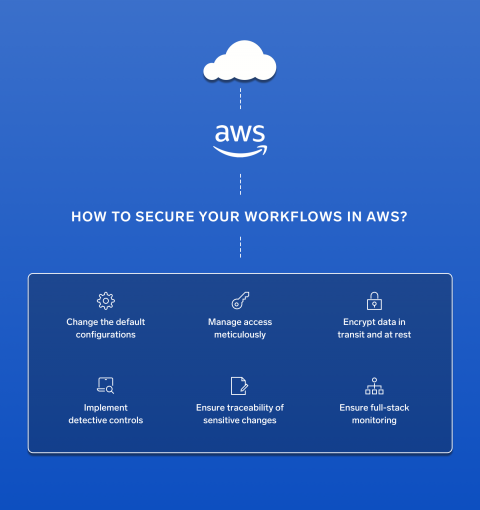
On AWS, your workloads will be as secure as you make them. The Shared Responsibility Model in which AWS operates ensures the security of the cloud, but what’s in the cloud needs to be secured by the user. This means that as a DevSecOps professional, you need to be proactive about securing your workloads in the Amazon cloud. Achieving the optimal level of security in a multi-cloud environment requires centralized, automated solutions.
Imagine a man, a metaphorical man, slumped over, sitting silently across from you. Do you see him? Hastily smashing his fingers against the keyboard with a feverish sweat running down his neck. He, like many, only opens his APM solution after those universally feared “oh shit!” moments. Like a firefighter with a magnifying glass, he dives into his logs looking for a needle in a haystack. But you… Well, you know better than that. You wouldn’t just use your APM on bad days.
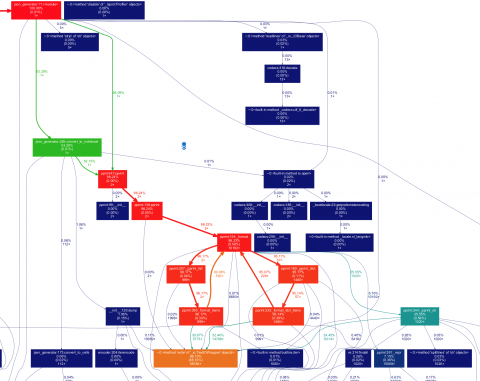
July 08, 2019 In this post, we will walk through various techniques that can be used to identify the performance bottlenecks in your python codebase and optimize them. The term "optimization" can apply to a broad level of metrics. But two general metrics of most interest are; CPU performance (execution time) and memory footprint. For this post, you can think of an optimized code as the one which is either able to run faster or use lesser memory or both. There are no hard and fast rules.
In the previous post, we discussed the various environments that Log360 helps you audit and secure. Having established the ease of Log360’s use and the breadth of its auditing scope, now we’ll examine some of the critical areas it can help you monitor. With over 1,000 predefined reports and alerts for several crucial types of network activity, Log360 provides comprehensive network auditing.