Operations | Monitoring | ITSM | DevOps | Cloud

The Great Cloud Repatriation: Why UK Businesses Are Bringing Data Home

More UK organisations are treating cloud location as a governance risk decision, because incidents and audits expose questions around jurisdiction, access and evidence. Recent research found that 87% of respondents plan to partially or fully move workloads away from the public cloud over the next two years, with 54% considering private cloud, 38% exploring greater reliance on their own data centres, and 36% assessing colocation.

Almaden at Arklok Kickoff: CEO Leandro Silva Highlights ITAM and DEX for HaaS

Almaden strengthened its leadership in the HaaS ecosystem by participating in the Arklok Technology Kickoff on March 11 and 12, 2026. CEO Leandro Silva shared strategic insights on ITAM and DEX, essential for providers to scale services efficiently.

How agentic AI for ITOps overcomes observability tool gaps

As enterprise ITOps teams monitor increasingly complex, cloud-based, containerized systems, traditional observability practices are struggling to keep up. As IT infrastructure complexity increases, the typical response is to layer on more monitoring, logging, and instrumentation.

Network Monitoring as Code

Tangling DNS, TCP handshake failures, packet loss: your network has blind spots that application-level dashboards miss. In this session, Daniel Paulus (VP Engineering, Checkly) sets up DNS, TCP, and ICMP monitors from scratch and deploys them as code using the Checkly CLI. You'll see how to import checks from the UI to a code project, use coding agents to build monitors, and debug network failures with Rocky AI, trace routes, and packet captures.

Product Update - March 2026

IncidentHub's latest product updates focus on improving the public status page, adding integrations with ticketing systems, private status page ingestion, and making the notifications more useful to the end user. Some of these improvements are driven by user feedback. Feedback is what makes the product better, and I am personally grateful to all our customers who have shared their feedback with us.

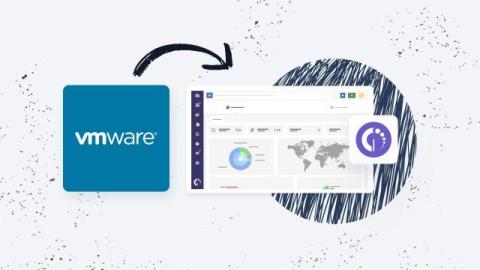
VMware Asset Discovery With InvGate Asset Management

The InvGate Asset Management and VMware integration helps IT teams bring virtual infrastructure into a centralized asset inventory. That matters because a complete, up-to-date IT inventory should include not only hardware and software, but also virtual assets such as ESXi hosts, vCenter instances, and virtual machines. Without that connection, teams often end up working with fragmented visibility, incomplete operational context, and multiple tools to monitor and manage different parts of the environment.

Flow State in an AI Workplace - Digital Friction 1:1 with Mike Lovewell

Tom welcomes Mike Lovewell to explore how digital friction continues to shape the modern workplace. From early days of low awareness to today’s complex, AI-influenced environments, Mike shares how friction has evolved in scale rather than cause. They discuss the growing importance of flow state, the measurable business impact of small disruptions, and why adoption—not just technology—is the key to success. AI emerges as both a solution and a new source of friction, depending on trust and usability.

What Are Blue-Green Deployments? | Understanding the Trade-offs

In this video, Eric Minick from Harness explains the fundamentals of blue-green deployments and how they help maintain a seamless user experience. Key topics covered include: Whether you are looking for fast rollbacks or safer production testing, blue-green deployments offer a powerful strategy for modern software delivery. Learn more about Blue-Green Deployments: If you enjoyed this video, consider subscribing to the channel for more videos.

Monitor schema health with engine.schema_fields: Structure, Drift, and Volatility

If you’ve worked with an observability pipeline, you’ve probably experienced schema problems: a field disappears, a type shifts from string to number, or a new label quietly appears. The causes are everywhere. Different teams adopt different naming conventions. A dependency upgrade changes the shape of a library’s log output. Over time, these small, reasonable decisions compound into schema sprawl: dashboards break, alerts misfire, and teams scramble to find out what happened.