AI went down. Work stopped. The lesson from the Claude outage: when AI fails, workflows stall and requests pile up. Resilient IT keeps work moving. Even when AI goes dark.
Pipeline Creation: Using a single prompt in the IDE, a CI/CD pipeline is created and triggered via the agent connected to the Harness MCP server. Failure Diagnosis and Fix: When the pipeline fails, the agent is used to diagnose the issue (a failed dependency) and propose a fix, which is then committed, pushed, and the pipeline re-triggered to succeed. Deployment: After a successful build, the artifact is deployed into a Kubernetes cluster. Incident Response.
The AI revolution is getting expensive. Ben Norris (AI Engineer at Civo) breaks down a staggering statistic: AI token usage has jumped from 9.8 trillion to 1.3 quadrillion in just under two years—a 130x increase. As businesses scale, the "closed source" premium is becoming a bottleneck. Watch as Ben explains why enterprises are turning toward democratized, open-source AI and smaller vendors like relaxAI to maintain power at a fraction of the cost.
What does it actually look like to build an AI-native product and lead an engineering team through the AI era when you've been doing it longer than most? Rob Zuber sits down with Loïc Houssier, CTO at Superhuman, to talk about what it meant to be an AI company before AI was everywhere, and how that early foundation shapes the way they build, ship, and think today.
Rails applications have a specific set of performance challenges that make monitoring genuinely useful rather than just box-checking. ActiveRecord is convenient to use and also convenient to accidentally write N+1 queries with. Memory bloat in long-running processes, particularly when Sidekiq or Action Cable is involved, is a recurring production problem for a lot of teams. Background job performance tends to degrade quietly until it becomes noticeable.
In March 2026, CloudZero’s Ben Austin, Director of Product Marketing, sat down with Ray Rike, Founder and CEO of Benchmarkit, to walk through findings from FinOps in the AI Era: A Critical Recalibration, a joint survey of nearly 500 organizational leaders on how they’re managing or, rather, struggling to manage AI costs.
Oh Dear has always been a desktop-first tool. If you checked your monitors on your phone, you'd get the full desktop layout squeezed into a tiny screen, with lots of horizontal scrolling and tiny tap targets. That's fixed now. Every page in the app works on mobile.
SQL Prompt's February releases focused on compatibility and stability, with a critical fix for SSMS 22.3 users and several features graduating from experimental to fully supported.
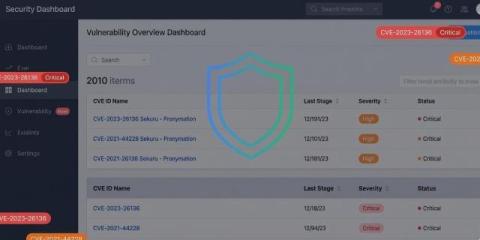
In microservices and cloud-native environments, vulnerabilities buried in transitive dependencies or runtime behaviors can go undetected for weeks. During that time, your attack surface keeps expanding and production systems remain exposed. The longer remediation is delayed, the greater the risk of exploitation, compliance failures, and operational disruption.
Increasingly, enterprises are interested in improving their level of control over their data, achieving digital sovereignty, and even building their own sovereign cloud. However, this means moving beyond thinking about just where your data is stored to thinking about the entire data lifecycle. In this blog, we cover the differences between data residency and data sovereignty, how confidential computing works to enhance the security of your data, and can support you in achieving digital sovereignty.