GitHub Sync is now ready for tryout!
The new GitHub Sync feature just opened up for public beta. Put your Browser check code into version control and automatically synchronize your GitHub code with Checkly.


The latest News and Information on APIs, Mobile, AI, Machine Learning, IoT, Open Source and more!
A Two Sigma engineer explains why we built Tensu, an open source TUI (text user interface)-based program for interacting with Sensu Go’s observability pipeline and backend API. In this article we will be putting a spotlight on Tensu, an open source terminal-based dashboard for interacting with and responding to events from the Sensu Go observability pipeline and backend API.
Firmware update capability has become a must-have for most devices. Whether to add new features after launch, fix bugs, or urgently patch a security hole, firmware updates gives modern teams the flexibility they need to move fast and react to a changing environment. I’ve written at length about firmware updates in the past, including on Interrupt with a Firmware Update Cookbook and a post about code signing, and even recorded a webinar on the topic.
By combining traffic replay capabilities from Speedscale with observability from Datadog, SRE Teams can deploy with confidence. It makes sense to centralize your monitoring data into as few silos as possible. With this integration, Speedscale will push the results of various traffic replay conditions into Datadog so it can be combined with the other observability data. Being able to preview application performance by simulating production conditions allows better release decisions. Moreover, a baseline to compare production metrics can provide even earlier signals on degradation and scale problems. Speedscale joined the Datadog Marketplace so customers can shift-left the discovery of performance issues.
TL;DR: Dashbird launched observability for AWS AppSync. Additionally to AWS Lambda, SQS, DynamoDB, API Gateway, ECS, Kinesis, Step Functions, ELB, SNS, RDS, OpenSearch, and HTTP API Gateway you can now get detailed insights and metrics in the Dashbird app for AWS AppSync. Since Facebook released its previously internally used query language GraphQL in 2016, it has seen an outstanding increase in adoptions for all kinds of applications.
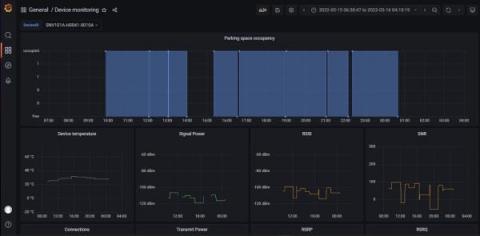
For smart cities of the future, monitoring infrastructure metrics like fuel and water levels is vital to optimizing operations. Fuelics PC designs and deploys battery-operated narrowband IoT (NB-IoT) sensors that monitor fuel, water, waste, and even parking capacity at the edge, then transmit that data to the cloud for easy viewing and monitoring.